
Essential Peptide Equipment Guide: Complete Setup Under $100
Introduction
You’ve researched your peptide. You’ve verified the vendor. Now you’re staring at a lyophilized powder wondering: what do I actually need to use this thing?
Good news: the equipment is straightforward, affordable, and mostly available on Amazon. The entire setup costs $50-100, and most items last through dozens of reconstitutions.
This guide covers everything you need—what each item does, which specifications matter, and where to buy. No fluff, no unnecessary upgrades, just the practical essentials.
What we’ll cover:
- Essential equipment (you can’t start without these)
- Recommended additions (nice to have)
- Budget breakdowns ($50 basic vs $100 complete)
- Where to buy everything
- Common mistakes to avoid
This guide is for research and educational purposes only.
The Essential Equipment List
These six items are non-negotiable. You cannot safely reconstitute and administer peptides without them.
1. Bacteriostatic Water (BAC Water)
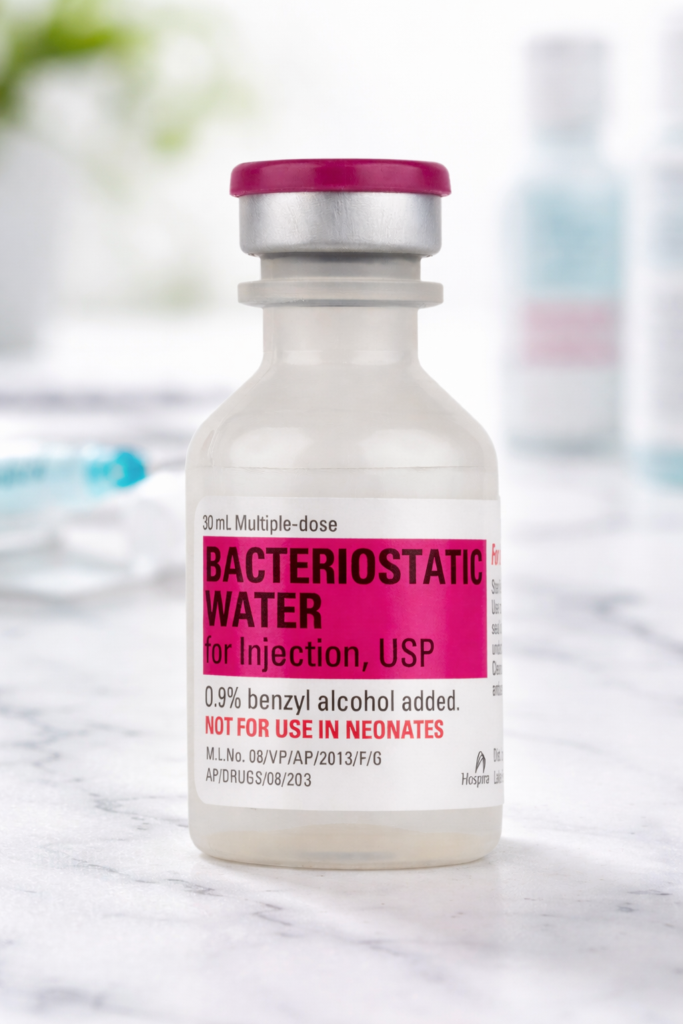
What it does: Dissolves the lyophilized (freeze-dried) peptide powder into an injectable solution.
Why bacteriostatic specifically: BAC water contains 0.9% benzyl alcohol, which acts as a preservative. This allows you to use the same vial for multiple doses over several weeks. Sterile water (without preservative) should only be used for single-dose preparations.
Specifications:
- Size: 30ml vials are most common and cost-effective
- Preservative: 0.9% benzyl alcohol (standard)
- Sterility: Must be pharmaceutical grade, not “for laboratory use only”
How much you need: One 30ml vial will reconstitute 10-15 peptide vials, depending on your preferred concentration.
Storage: Room temperature before opening. Refrigerate after first use. Discard 28 days after opening.
Where to buy:
- Amazon: Hospira or equivalent pharmaceutical-grade BAC water (~$15-25 for 30ml)
- Your peptide vendor may also sell it
2. Insulin Syringes
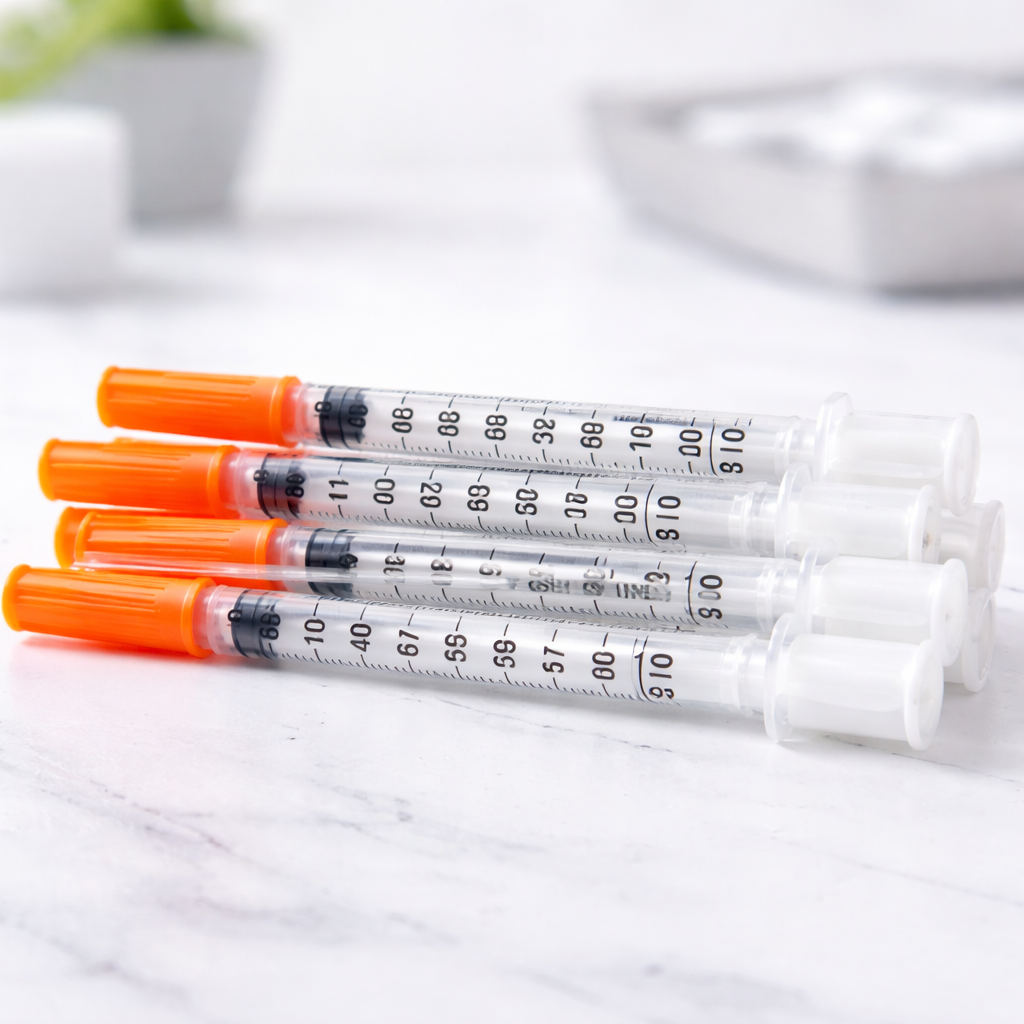
What they do: Used for both reconstitution (adding water to vial) and administration (injecting the peptide).
Why insulin syringes: They’re designed for subcutaneous injection with fine-gauge needles that minimize discomfort. The small capacity (0.3-1.0ml) allows precise measurement of small doses.
How many you need: One syringe per injection. Never reuse needles—this is non-negotiable for sterility and safety.
| Spec | Recommended | Notes |
|---|---|---|
| Guage | 29G – 31G | Higher number = thinner needle. 29G is versatile; 31G is thinnest/least painful |
| Capacity | .5ml or 1.0ml | 1.0ml offers more flexibility; 0.5ml for very small doses. 0.3ml is also available and can be used for very small doses as well |
| Needle Length | 1/2 inch | Works for most body types for subcutaneous injection |
| Scale | U-100 | Standard insulin scale, marked in units |
Popular options:
- Easy Touch U-100 (29G, 1cc, 1/2″): ~$15 for 100 count
- BD Ultra-Fine (31G, 1cc, 5/16″): ~$25 for 100 count
Where to buy:
- Amazon (no prescription required for insulin syringes in most states)
- Local pharmacy (may require explanation of use)
3. Alcohol Prep Pads
What they do: Sterilize the rubber stopper on vials before inserting a needle, and clean injection sites on skin.
Why they matter: The rubber stopper on peptide vials isn’t sterile on the outside. Every time you insert a needle, you risk introducing bacteria. A quick swipe with an alcohol pad eliminates this risk.
Specifications:
- Size: Medium (standard prep pad size)
- Alcohol concentration: 70% isopropyl alcohol (this is standard)
- Individually wrapped: Yes—bulk unwrapped pads dry out
How many you need: Two per session minimum—one for the vial stopper, one for injection site.
Where to buy:
- Amazon: ~$8-12 for 200 count (Curad, BD, or generic)
- Any pharmacy
4. Sharps Container
What it does: Provides safe disposal for used needles and syringes.
Why you need one: Used needles are biohazardous waste. Throwing them in regular trash is illegal in most areas and dangerous for anyone handling your garbage. A proper sharps container is puncture-resistant and clearly labeled.
Specifications:
- Size: 1-2 quart for personal use (will last months)
- Material: Rigid, puncture-proof plastic
- Certification: FDA-cleared for sharps disposal
Where to buy:
- Amazon: ~$8-15 for a 1-quart container
- Many pharmacies will provide free sharps containers
- Some areas have sharps mail-back programs
Disposal: When full, seal and take to a pharmacy, hospital, or hazardous waste facility. Many pharmacies accept used sharps containers for free.
5. Mixing Syringes (3ml Luer Lock)
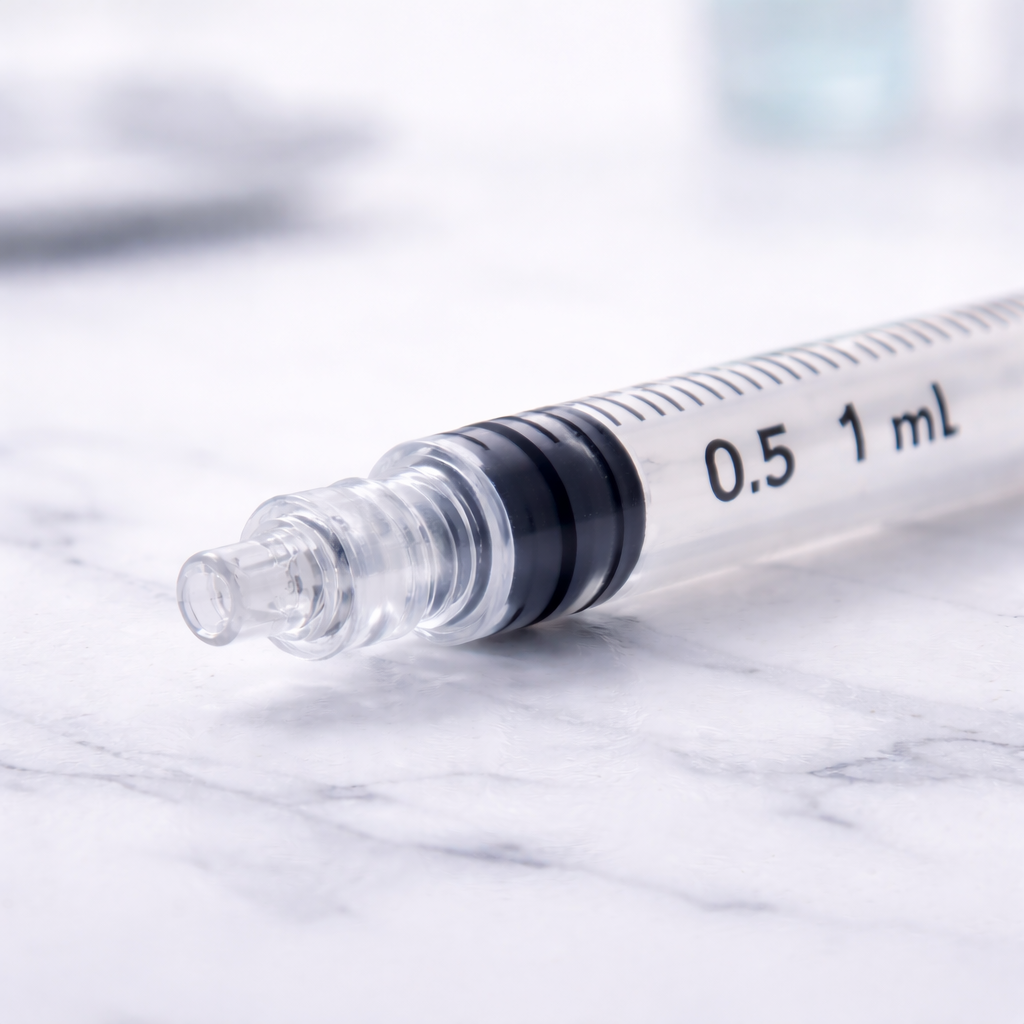
What they do: Used specifically for transferring BAC water into peptide vials during reconstitution.
Why separate from insulin syringes: Insulin syringes have fixed needles and small capacities. For reconstitution, you often need to transfer 1-2ml of water, which is easier with a larger syringe. Luer lock connections let you swap needle sizes.
Specifications:
- Capacity: 3ml (most common and practical)
- Type: Luer lock (twist-on needle connection)
- Needles: 25G or 27G, 1.5 inch length (sold separately or in kits)
Where to buy:
- Amazon: ~$10-15 for 20-pack with needles
6. Reconstitution Needles
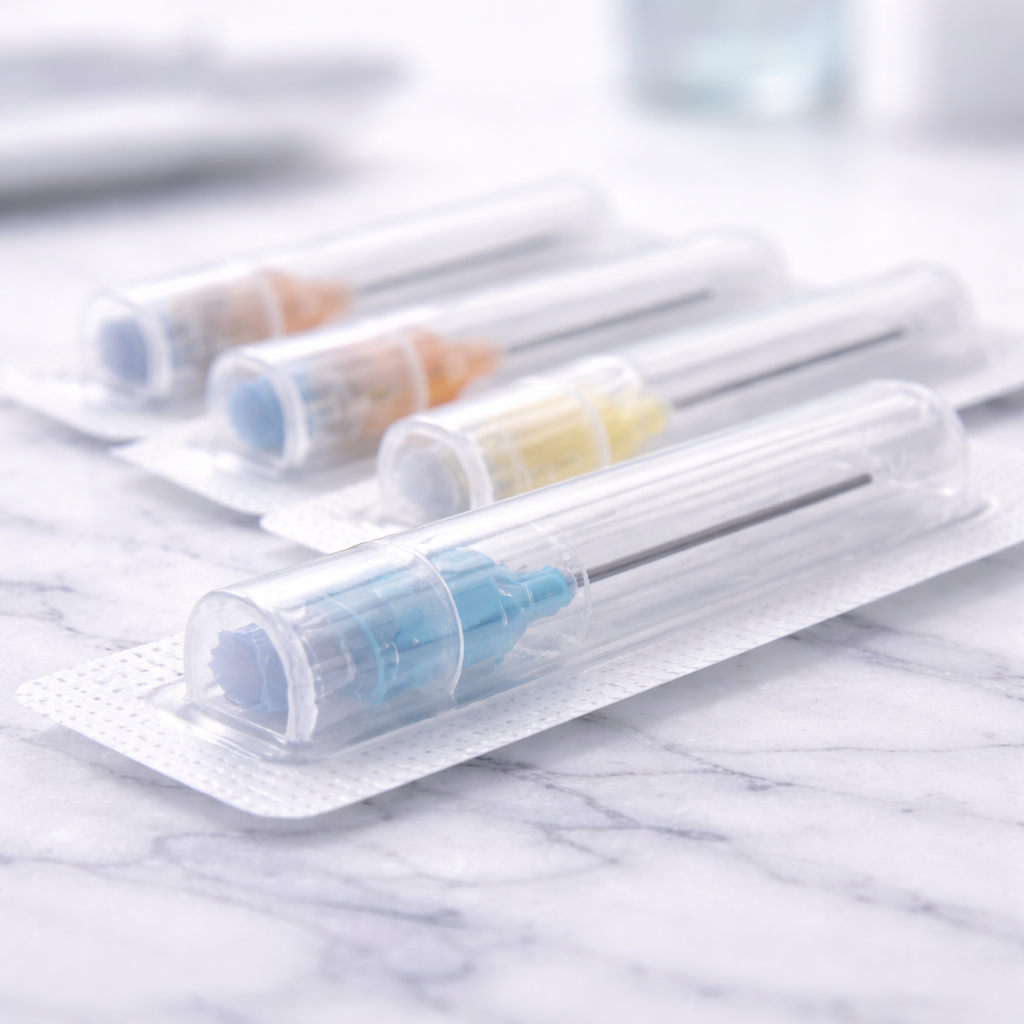
What they do: Attach to mixing syringes for drawing BAC water and injecting it into peptide vials.
Why specific needles: You need a needle long enough to reach the bottom of the BAC water vial (1.5 inch) and a gauge that allows easy flow without being so large it damages the vial stopper with repeated use.
Specifications:
- Gauge: 25G-27G (good flow rate, minimal stopper damage)
- Length: 1.5 inch (reaches bottom of standard vials)
- Type: Luer lock compatible
Where to buy:
- Amazon: Often sold with mixing syringes in kits
- Separately: ~$8-10 for 100 count
Recommended Equipment (Nice to Have)
These items aren’t strictly necessary but make the process easier, safer, or more organized.
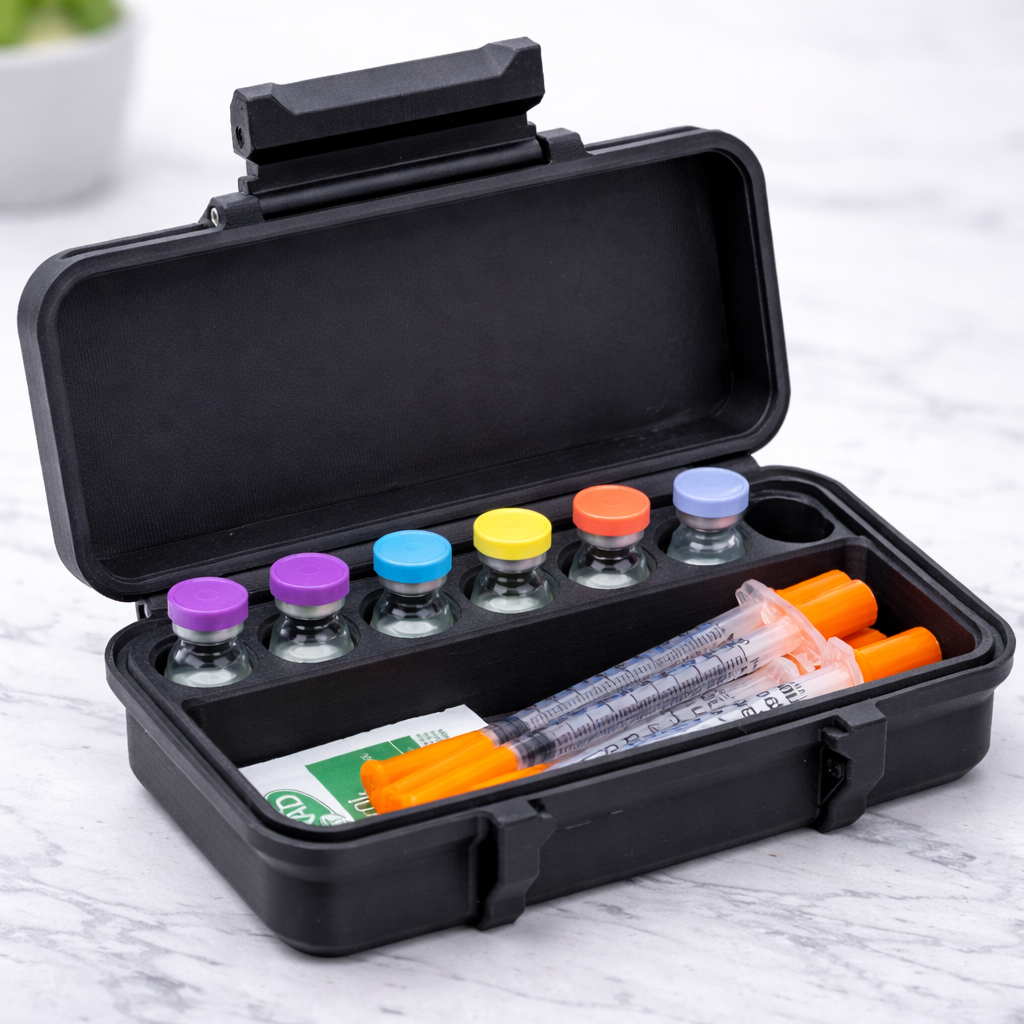
Peptide Storage Case
What it does: Keeps vials organized and protected in the refrigerator.
Why it helps: Peptide vials are small and easy to lose in a fridge. A dedicated case prevents them from getting knocked over, keeps them away from food, and makes it easy to track what you have.
Options:
- Small plastic cases designed for vials (~$10-20)
- Foam inserts for standard small containers
- Some vendors sell branded storage cases
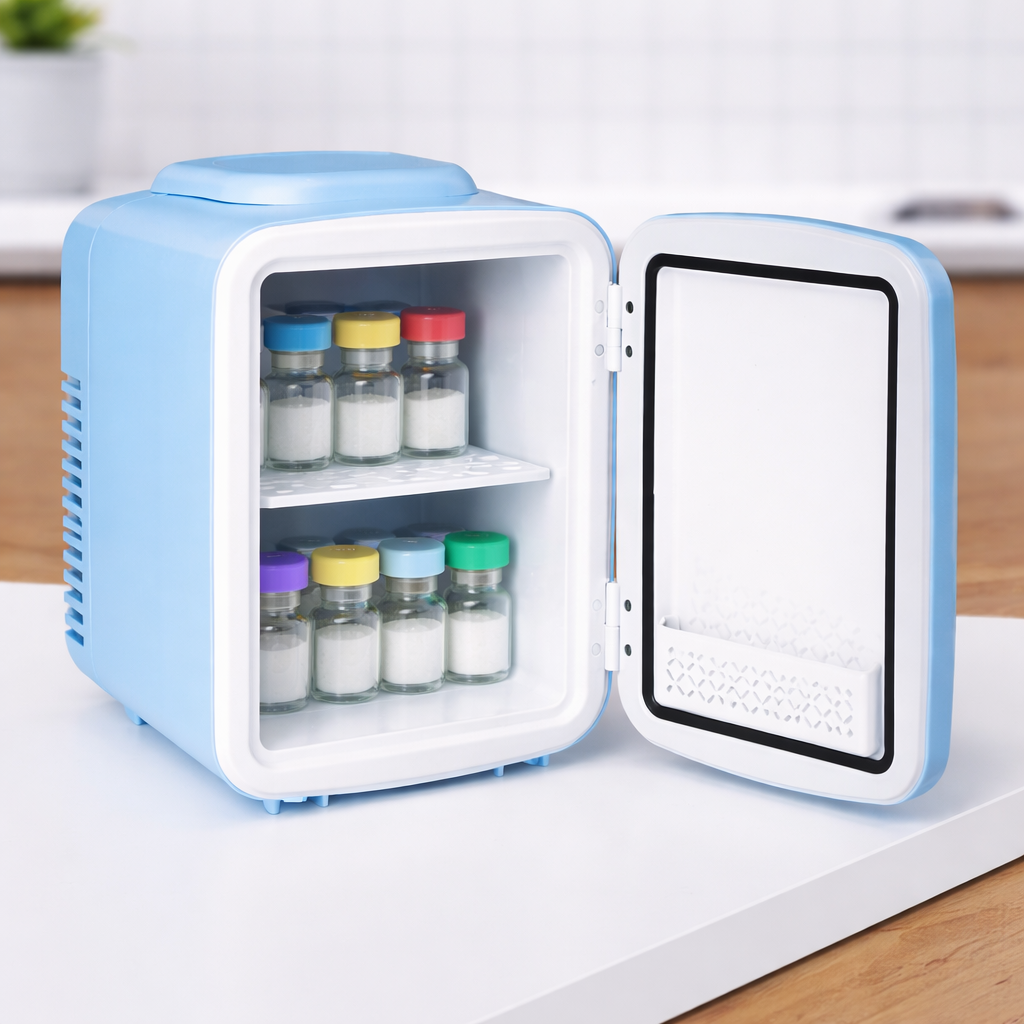
Mini Refrigerator
What it does: Provides dedicated cold storage for peptides only.
Why it helps:
- Keeps peptides separate from food
- Maintains consistent temperature (household fridges fluctuate)
- Prevents accidental disposal by family members
- Useful if you travel or want a secondary locationrd small containers
- Some vendors sell branded storage cases
Specifications:
- Small countertop size (1.7-2.5 cubic feet) is plenty
- Temperature should maintain 36-46°F (2-8°C)
Cost: $50-100 for a basic mini fridge
Budget Breakdown
Basic Setup (~$50)
| Item | Qty | Est. Cost |
|---|---|---|
| Bacteriostatic Water (30ml) | 1 | $18 |
| Insulin Syringes (100ct) | 1 box | $15 |
| Alcohol Prep Pads (200ct) | 1 box | $10 |
| Sharps Container (1qt) | 1 | $8 |
| Total | ~$51 |
Note: This assumes you’ll use insulin syringes for both reconstitution and injection, which works but requires more careful technique.
Complete Setup (~$100)
| Item | Qty | Est. Cost |
|---|---|---|
| Bacteriostatic Water (30ml) | 2 | $36 |
| Insulin Syringes (100ct) | 1 box | $15 |
| Mixing Syringes 3ml + Needle | 1 kit | $12 |
| Alcohol Prep Pads (200ct) | 1 box | $10 |
| Sharps Container (2 gallon) | 1 | $12 |
| Vial Storage Case | 1 | $15 |
| Total | ~$100 |
This setup is more practical for ongoing use and includes backup BAC water.
Where to Buy: Quick Reference
| Item | Best Source | Notes |
|---|---|---|
| Bacteriostatic Water | Amazon, peptide vendors | Ensure pharmaceutical grade |
| Insulin Syringes | Amazon | No Rx required in most states |
| Mixing Syringes | Amazon | Often sold in reconstitution kits |
| Alcohol Pads | Amazon, any pharmacy | Generic is fine |
| Sharps Container | Amazon, any pharmacy | Some pharmacies provide free |
| Vial Storage Case | Amazon | Or repurpose any small container |
Pro tip: Some peptide vendors sell “reconstitution kits” that bundle syringes, needles, BAC water, and alcohol pads together. These can be convenient but are usually priced at a premium. Buying separately on Amazon is typically cheaper.
Common Mistakes to Avoid
1. Using Sterile Water Instead of Bacteriostatic Water
Sterile water has no preservative. Once you add it to a peptide vial, you must use the entire contents immediately or within hours. BAC water allows multi-week storage of reconstituted peptides.
2. Reusing Insulin Syringes
Never reuse needles for injection. The needle dulls after a single use, making subsequent injections more painful and increasing infection risk. Syringes are cheap—use a fresh one every time.
3. Buying the Wrong Gauge Needle
Needles larger than 27G (lower gauge number = thicker needle) are unnecessarily painful for subcutaneous peptide injection. Stick with 29G-31G.
4. Storing BAC Water Incorrectly
Unopened BAC water can be stored at room temperature. Once opened, refrigerate and use within 28 days. Mark the date on the vial when you first use it.
5. Not Using Alcohol Pads
Skipping the sterilization step saves 5 seconds and risks bacterial contamination. Always swab vial stoppers and injection sites.
6. Improper Sharps Disposal
Never throw loose needles in the trash. Use a proper sharps container and dispose of it according to local regulations. Most pharmacies accept full sharps containers.
FAQs
Q: Can I use the same syringe for reconstitution and injection?
Yes, you can use insulin syringes for both if you’re careful. Draw the BAC water, inject it into the peptide vial, wait for dissolution, then draw your dose. However, dedicated mixing syringes make this easier, especially for larger volumes.
Q: How long do supplies last?
A box of 100 syringes lasts most people 2-4 months depending on dosing frequency. One 30ml BAC water vial reconstitutes 10-15 peptide vials. Alcohol pads are pennies each.
Q: Do I need a prescription for insulin syringes?
In most US states, no prescription is required. Some states have restrictions. Amazon ships to most locations without issue.
Q: What if my peptide vendor includes BAC water?
Use it. Vendor-supplied BAC water is typically the same pharmaceutical-grade product you’d buy elsewhere. It may be priced slightly higher but saves you a separate purchase.
Q: Should I buy a starter kit or individual items?
Individual items are usually cheaper and let you choose exact specifications. Starter kits are convenient if you want everything in one order and don’t mind paying a small premium.
What’s Next
Now that you have your equipment, you’re ready to learn the process:
Leave a Reply