Author: gholland9774

  • BPC-157 Complete Guide: The Body Protection Compound
    BPC-157 Complete Guide: The Body Protection Compound

    BPC-157 is one of the most researched and widely discussed peptides in the biohacking and research community. Known formally as “Body Protection Compound-157,” this synthetic peptide has generated significant interest for its potential healing and regenerative properties.

    But separating fact from hype isn’t easy. Forums are full of anecdotal reports, while the actual scientific literature tells a more nuanced story.

    This guide cuts through the noise. We’ll cover what BPC-157 actually is, what the research shows (and doesn’t show), commonly used protocols, and important safety considerations. No exaggerated claims—just the information you need to make informed decisions.

    What we’ll cover:

    • What BPC-157 is and where it comes from
    • Mechanism of action (how it works)
    • What the research actually shows
    • Common protocols and dosing
    • Safety considerations and side effects
    • Practical guidelines for researchers

    This guide is for research and educational purposes only. BPC-157 is not FDA-approved for human use.


    BPC-157 (Body Protection Compound-157) is a synthetic peptide consisting of 15 amino acids. It’s derived from a protein found naturally in human gastric juice—the digestive fluid in your stomach.

    The sequence: Gly-Glu-Pro-Pro-Pro-Gly-Lys-Pro-Ala-Asp-Asp-Ala-Gly-Leu-Val

    Key characteristics:

    • 15 amino acids (pentadecapeptide)
    • Molecular weight: ~1,419 Daltons
    • Stability: Unusually stable in gastric acid (unlike most peptides)
    • Origin: Derived from human gastric juice protein BPC

    The name comes from early research showing the peptide’s cytoprotective properties—its ability to protect cells from damage and support recovery. Researchers observed that this gastric peptide seemed to have effects far beyond the digestive system.

    BPC-157 is typically available in two forms:

    FormDescriptionNotes
    BPC-157 (free form)Standard peptide formMost common in research
    BPC-157 ArginateStabilized with arginine saltClaimed longer stability

    Both forms contain the same active peptide sequence. The arginate form is marketed as more stable, though comparative research is limited.


    BPC-157’s effects appear to work through multiple interconnected pathways. This “pleiotropic” activity—affecting many systems simultaneously—is one reason it’s attracted research interest.

    BPC-157 appears to promote the formation of new blood vessels, which is critical for tissue repair. Research suggests it:

    • Upregulates VEGFR2 (vascular endothelial growth factor receptor-2)
    • Promotes endothelial cell migration
    • Supports blood flow to damaged tissues

    Why it matters: Injured tissue needs blood supply to heal. Enhanced angiogenesis could accelerate recovery.

    The peptide interacts with the nitric oxide (NO) system, which regulates:

    • Blood vessel dilation
    • Blood pressure
    • Cellular signaling

    Research indicates BPC-157 can both increase and decrease NO activity depending on context—suggesting it may help restore balance rather than simply pushing in one direction.

    BPC-157 appears to upregulate several growth factors:

    • VEGFR2 — blood vessel growth (via receptor activation)
    • EGF — tissue repair
    • Growth hormone receptors — regeneration

    Interestingly, BPC-157 has shown effects on multiple neurotransmitter systems:

    • Dopamine
    • Serotonin
    • GABA
    • Acetylcholine
    • Glutamate

    This may explain some of the reported cognitive and mood-related effects, though human data is limited.

    Research suggests BPC-157 may reduce inflammatory markers and support resolution of inflammation, though the exact mechanisms are still being studied.


    Let’s be clear about the current state of BPC-157 research:

    TypeStatus
    In vitro (cell studies)Extensive
    Animal studiesExtensive (rats, mice, rabbits, dogs)
    Human clinical trialsVery limited
    FDA approvalNone

    Most of what we know comes from animal research. While promising, this doesn’t automatically translate to humans.

    Musculoskeletal Healing

    Animal studies have shown BPC-157 may accelerate healing of:

    • Tendons — Achilles tendon transection in rats showed faster recovery
    • Ligaments — MCL injuries in rats healed more quickly
    • Muscles — Crushed muscle tissue showed improved regeneration
    • Bones — Some evidence of fracture healing support

    A 2025 systematic review in orthopedic sports medicine concluded that while animal studies are promising, “the lack of clinical safety data” means human applications remain investigational.

    Gastrointestinal Effects

    Given its origin in gastric juice, GI effects have been extensively studied:

    • Ulcer healing — Multiple studies show accelerated healing
    • Gut lining protection — Protective effects against NSAID damage
    • Inflammatory bowel conditions — Reduced inflammation in animal models
    • Gut-brain axis — Potential effects on gut-brain communication

    Wound Healing

    Research shows potential benefits for:

    • Skin wound closure
    • Burn healing
    • Surgical wound recovery
    • Corneal injuries

    Organ Protection

    Animal studies suggest protective effects for:

    • Liver (against alcohol and drug toxicity)
    • Heart (ischemia-reperfusion injury)
    • Brain (traumatic injury models)
    • Kidneys

    What the research does NOT show:

    • Long-term human safety data
    • Optimal human dosing
    • Efficacy in human clinical trials
    • Interaction with medications
    • Effects in specific disease states

    The gap: There’s a significant distance between “works in rats” and “safe and effective in humans.” BPC-157 has not bridged this gap through rigorous clinical trials.


    The following information reflects commonly reported protocols in the research community. These are not medical recommendations.

    PurposeDaily DoseFrequency
    General/maintenance250 mcgOnce daily
    Moderate support250-500 mcgOnce or twice daily
    Acute/intensive500 mcgTwice daily
    Maximum reported1,000 mcgSplit doses

    Note: These ranges come from extrapolation of animal data and community reports, not human clinical trials.

    Many researchers prefer a gradual approach:

    WeekDaily Dose
    1-2200-250 mcg
    3-4300-400 mcg
    5+400-500 mcg

    Starting low allows assessment of individual response and tolerance.

    Typical protocol:

    • Cycle length: 4-8 weeks
    • Break: 2-4 weeks between cycles
    • Reason: Prevent potential receptor desensitization

    Some researchers use BPC-157 continuously for specific purposes, while others prefer cycling. There’s no definitive research establishing the optimal approach.

    RouteBioavailabilityCommon Use
    Subcutaneous injectionHighestMost common for researchers
    Intramuscular injectionHighNear injury site
    OralLower (but surprisingly viable)Gut-specific effects

    BPC-157 is unusually stable in gastric acid, making oral administration more viable than with most peptides. However, injectable forms provide more predictable dosing.

    For subcutaneous injection:

    • Abdominal fat — Standard site, easy access
    • Near injury site — Some prefer local administration
    • Thigh — Alternative site

    Rotate injection sites to prevent irritation.

    Standard approach:

    1. Add 2ml bacteriostatic water to 5mg vial
    2. Creates 2.5 mg/ml concentration (2,500 mcg/ml)
    3. 0.1ml (10 units on insulin syringe) = 250 mcg
    • Once daily: Morning or evening (consistency matters more than timing)
    • Twice daily: Morning and evening, 8-12 hours apart
    • With food: Not necessary, but some prefer it

    Animal toxicity studies have been conducted with generally favorable results:

    • Single-dose studies: No significant adverse effects
    • Repeated-dose studies: Well tolerated in mice, rats, rabbits, dogs
    • Genetic toxicity: No mutagenic effects observed
    • Embryo-fetal toxicity: No effects observed in studies
    • Local irritation: Mild at injection sites

    One study noted decreased creatinine levels at high doses (2 mg/kg) in dogs, which normalized after discontinuation.

    Limited. A pilot study examining IV infusion of BPC-157 in humans has been conducted, but comprehensive human safety data is not yet available.

    Based on community reports (not clinical data):

    Common:

    • Injection site irritation/redness
    • Mild nausea (especially initially)
    • Fatigue or drowsiness
    • Lightheadedness

    Less Common:

    • Headache
    • Digestive changes
    • Hot/cold sensations

    Serious (rare reports):

    • Allergic reactions
    • Blood pressure changes

    Avoid if you have:

    • Active cancer or history of cancer (angiogenesis concern)
    • Pregnancy or breastfeeding
    • Autoimmune conditions (theoretical concern)
    • Upcoming surgery (angiogenesis may affect healing)
    • Allergies to peptides

    Use caution with:

    • Blood pressure medications
    • Immunosuppressants
    • Any chronic health condition

    BPC-157 promotes angiogenesis (blood vessel growth). Tumors also rely on angiogenesis to grow. This raises theoretical concerns about whether BPC-157 could promote tumor growth in someone with cancer.

    The research:

    • Some animal studies suggest BPC-157 may actually have anti-tumor effects
    • No studies show it promotes cancer
    • But absence of evidence isn’t evidence of absence

    Conservative approach: Avoid BPC-157 if you have active cancer or significant cancer risk factors.


    BPC-157 is frequently used alongside TB-500 (Thymosin Beta-4), another healing-focused peptide. The combination is popular because they work through different mechanisms:

    PeptidePrimary Mechanism
    BPC-157Angiogenesis, growth factors, GI protection
    TB-500Cell migration, inflammation reduction, flexibility

    Common stack protocol:

    • BPC-157: 250-500 mcg daily
    • TB-500: 2-2.5 mg twice weekly

    Note: Stacking increases complexity and potential for interactions. Some researchers prefer to use one peptide at a time to assess individual response.


    Peptide quality varies dramatically between vendors. For BPC-157:

    • Third-party COA with HPLC purity ≥98%
    • Mass spectrometry confirming identity
    • Batch-specific testing (not generic)
    • Recent test date (within 6 months)
    • Verifiable lab (contact info, not just a logo)
    • Purity claims of exactly 100%
    • No COA available
    • Generic or reused batch numbers
    • No third-party testing
    • Prices significantly below market

    ConditionDuration
    Freezer (-20°C)2+ years
    Refrigerator (2-8°C)12-24 months
    Room temperatureWeeks (not recommended)
    ConditionDuration
    Refrigerator (2-8°C)4-6 weeks
    Room temperatureHours only
    FreezerDo not freeze after reconstitution

    Best practices:

    • Store away from light
    • Keep sealed until ready to use
    • Label vials with reconstitution date
    • Never shake—swirl gently

    In most countries, BPC-157 is legal to purchase for research purposes. It is not FDA-approved for human use and cannot be sold as a supplement or medication. Legal status varies by jurisdiction.

    Anecdotal reports suggest some effects within days to weeks, with more significant results over 4-8 weeks. Individual response varies significantly.

    Yes, unlike most peptides, BPC-157 is stable in stomach acid. Oral bioavailability is lower than injection but may be sufficient for gut-focused applications. Capsule and liquid oral forms exist.

    There’s no definitive research. Many researchers cycle (4-8 weeks on, 2-4 weeks off) to prevent potential receptor desensitization, but some use it continuously.

    Some researchers prefer injecting subcutaneously near the injury site, theorizing this provides more localized effect. Others use standard abdominal injection. There’s no conclusive research on which is superior.

    BPC-157 Arginate is stabilized with an arginine salt. Manufacturers claim improved stability, but comparative research is limited. The active peptide is identical.

    Unknown. No interaction studies have been published. Use caution if taking any medications, especially those affecting blood pressure or the cardiovascular system.


    BPC-157 is one of the most promising peptides in the healing and recovery space, backed by extensive preclinical research showing potential benefits for tissue repair, gut health, and protection against various injuries.

    The case for BPC-157:

    • Extensive positive animal research
    • Favorable preclinical safety profile
    • Multiple mechanisms of action
    • Unusually stable for a peptide
    • Strong community support

    The case for caution:

    • Very limited human clinical data
    • No FDA approval
    • Long-term effects unknown
    • Theoretical concerns (cancer, angiogenesis)
    • Quality control issues with vendors

    If you choose to research BPC-157, prioritize:

    1. Quality sourcing with verified COAs
    2. Conservative dosing to start
    3. Awareness of theoretical risks
    4. Monitoring for any adverse effects

    This peptide shows promise, but promise isn’t proof. Stay informed, stay cautious, and make decisions based on evidence—not hype.


    1. PMC (2025). “Regeneration or Risk? A Narrative Review of BPC-157 for Musculoskeletal Healing.”
    2. Pharmaceuticals (2025). “Multifunctionality and Possible Medical Application of the BPC 157 Peptide—Literature and Patent Review.”
    3. MDPI Pharmaceuticals (2024). “The Stable Gastric Pentadecapeptide BPC 157 Pleiotropic Beneficial Activity.”
    4. PMC (2025). “Emerging Use of BPC-157 in Orthopaedic Sports Medicine: A Systematic Review.”
    5. Regulatory Toxicology and Pharmacology (2020). “Preclinical safety evaluation of body protective compound-157.”
  • Essential Peptide Equipment Guide: Complete Setup Under $100

    Essential Peptide Equipment Guide: Complete Setup Under $100


    You’ve researched your peptide. You’ve verified the vendor. Now you’re staring at a lyophilized powder wondering: what do I actually need to use this thing?

    Good news: the equipment is straightforward, affordable, and mostly available on Amazon. The entire setup costs $50-100, and most items last through dozens of reconstitutions.

    This guide covers everything you need—what each item does, which specifications matter, and where to buy. No fluff, no unnecessary upgrades, just the practical essentials.

    What we’ll cover:

    • Essential equipment (you can’t start without these)
    • Recommended additions (nice to have)
    • Budget breakdowns ($50 basic vs $100 complete)
    • Where to buy everything
    • Common mistakes to avoid

    This guide is for research and educational purposes only.


    These six items are non-negotiable. You cannot safely reconstitute and administer peptides without them.

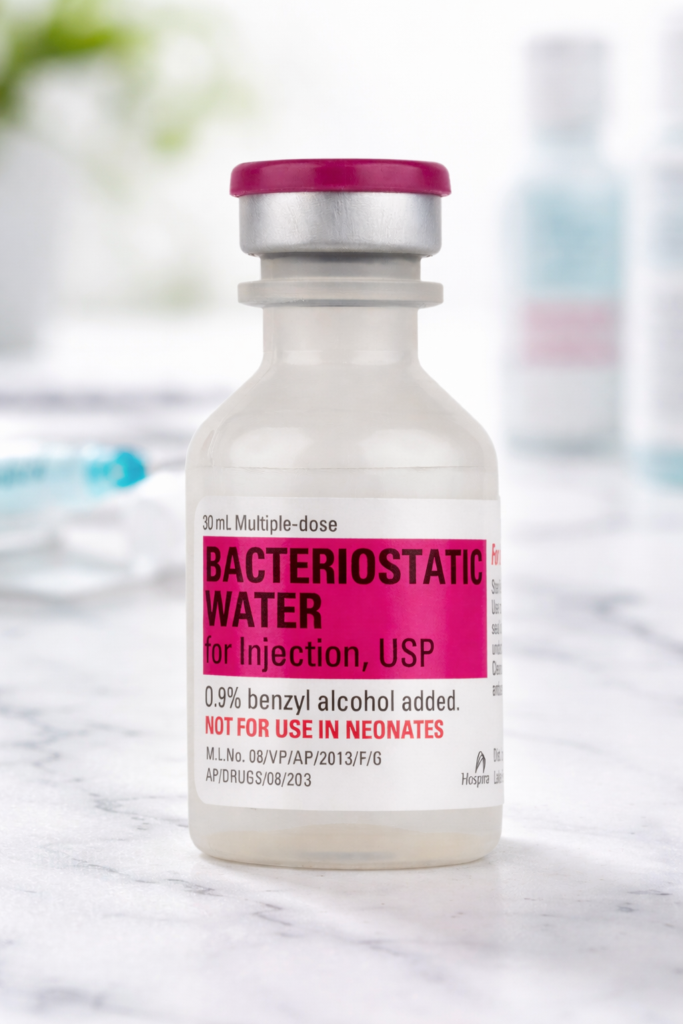
    What it does: Dissolves the lyophilized (freeze-dried) peptide powder into an injectable solution.

    Why bacteriostatic specifically: BAC water contains 0.9% benzyl alcohol, which acts as a preservative. This allows you to use the same vial for multiple doses over several weeks. Sterile water (without preservative) should only be used for single-dose preparations.

    Specifications:

    • Size: 30ml vials are most common and cost-effective
    • Preservative: 0.9% benzyl alcohol (standard)
    • Sterility: Must be pharmaceutical grade, not “for laboratory use only”

    How much you need: One 30ml vial will reconstitute 10-15 peptide vials, depending on your preferred concentration.

    Storage: Room temperature before opening. Refrigerate after first use. Discard 28 days after opening.

    Where to buy:

    • Amazon: Hospira or equivalent pharmaceutical-grade BAC water (~$15-25 for 30ml)
    • Your peptide vendor may also sell it

    What they do: Used for both reconstitution (adding water to vial) and administration (injecting the peptide).

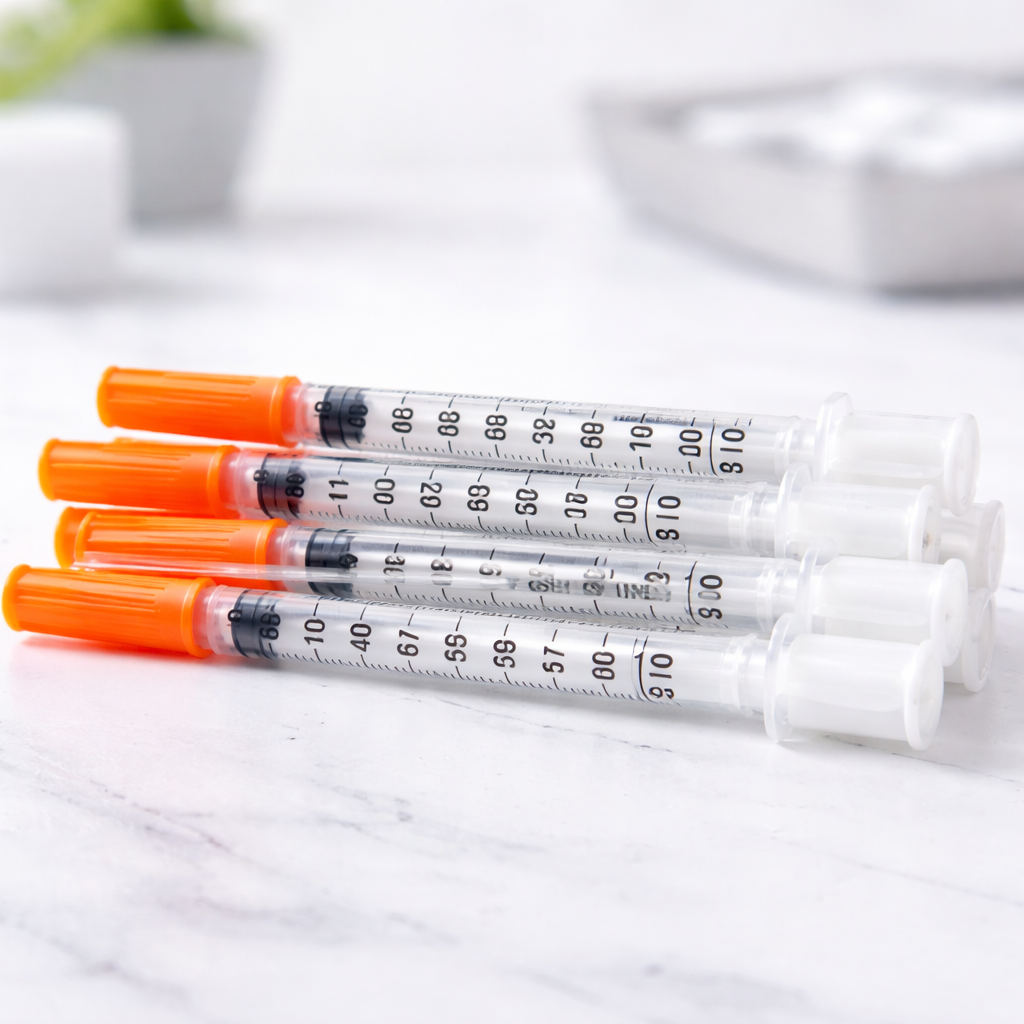
    Why insulin syringes: They’re designed for subcutaneous injection with fine-gauge needles that minimize discomfort. The small capacity (0.3-1.0ml) allows precise measurement of small doses.

    How many you need: One syringe per injection. Never reuse needles—this is non-negotiable for sterility and safety.

    SpecRecommendedNotes
    Guage29G – 31GHigher number = thinner needle. 29G is versatile; 31G is thinnest/least painful
    Capacity.5ml or 1.0ml1.0ml offers more flexibility; 0.5ml for very small doses. 0.3ml is also available and can be used for very small doses as well
    Needle Length1/2 inchWorks for most body types for subcutaneous injection
    ScaleU-100Standard insulin scale, marked in units

    Popular options:

    • Easy Touch U-100 (29G, 1cc, 1/2″): ~$15 for 100 count
    • BD Ultra-Fine (31G, 1cc, 5/16″): ~$25 for 100 count

    Where to buy:

    • Amazon (no prescription required for insulin syringes in most states)
    • Local pharmacy (may require explanation of use)

    What they do: Sterilize the rubber stopper on vials before inserting a needle, and clean injection sites on skin.

    Why they matter: The rubber stopper on peptide vials isn’t sterile on the outside. Every time you insert a needle, you risk introducing bacteria. A quick swipe with an alcohol pad eliminates this risk.

    Specifications:

    • Size: Medium (standard prep pad size)
    • Alcohol concentration: 70% isopropyl alcohol (this is standard)
    • Individually wrapped: Yes—bulk unwrapped pads dry out

    How many you need: Two per session minimum—one for the vial stopper, one for injection site.

    Where to buy:

    • Amazon: ~$8-12 for 200 count (Curad, BD, or generic)
    • Any pharmacy

    What it does: Provides safe disposal for used needles and syringes.

    Why you need one: Used needles are biohazardous waste. Throwing them in regular trash is illegal in most areas and dangerous for anyone handling your garbage. A proper sharps container is puncture-resistant and clearly labeled.

    Specifications:

    • Size: 1-2 quart for personal use (will last months)
    • Material: Rigid, puncture-proof plastic
    • Certification: FDA-cleared for sharps disposal

    Where to buy:

    • Amazon: ~$8-15 for a 1-quart container
    • Many pharmacies will provide free sharps containers
    • Some areas have sharps mail-back programs

    Disposal: When full, seal and take to a pharmacy, hospital, or hazardous waste facility. Many pharmacies accept used sharps containers for free.

    What they do: Used specifically for transferring BAC water into peptide vials during reconstitution.

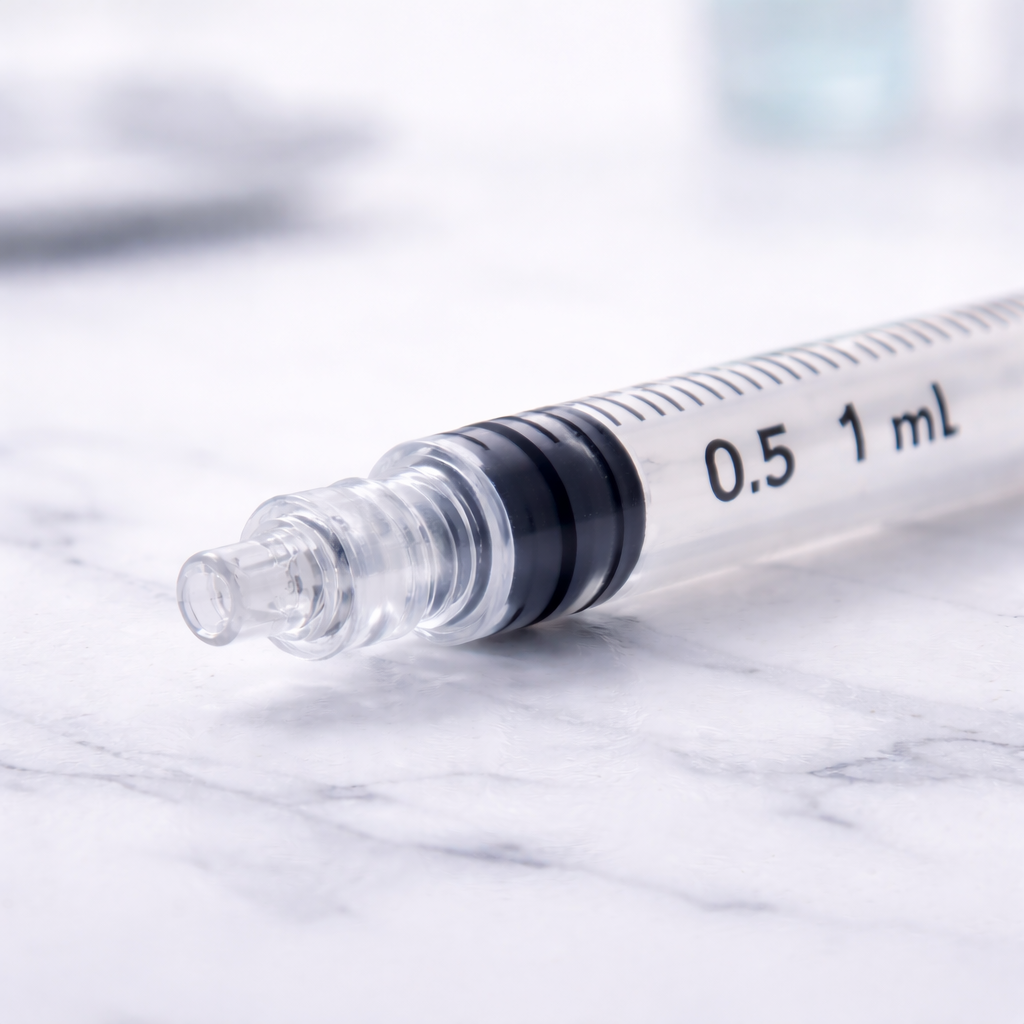
    Why separate from insulin syringes: Insulin syringes have fixed needles and small capacities. For reconstitution, you often need to transfer 1-2ml of water, which is easier with a larger syringe. Luer lock connections let you swap needle sizes.

    Specifications:

    • Capacity: 3ml (most common and practical)
    • Type: Luer lock (twist-on needle connection)
    • Needles: 25G or 27G, 1.5 inch length (sold separately or in kits)

    Where to buy:

    • Amazon: ~$10-15 for 20-pack with needles

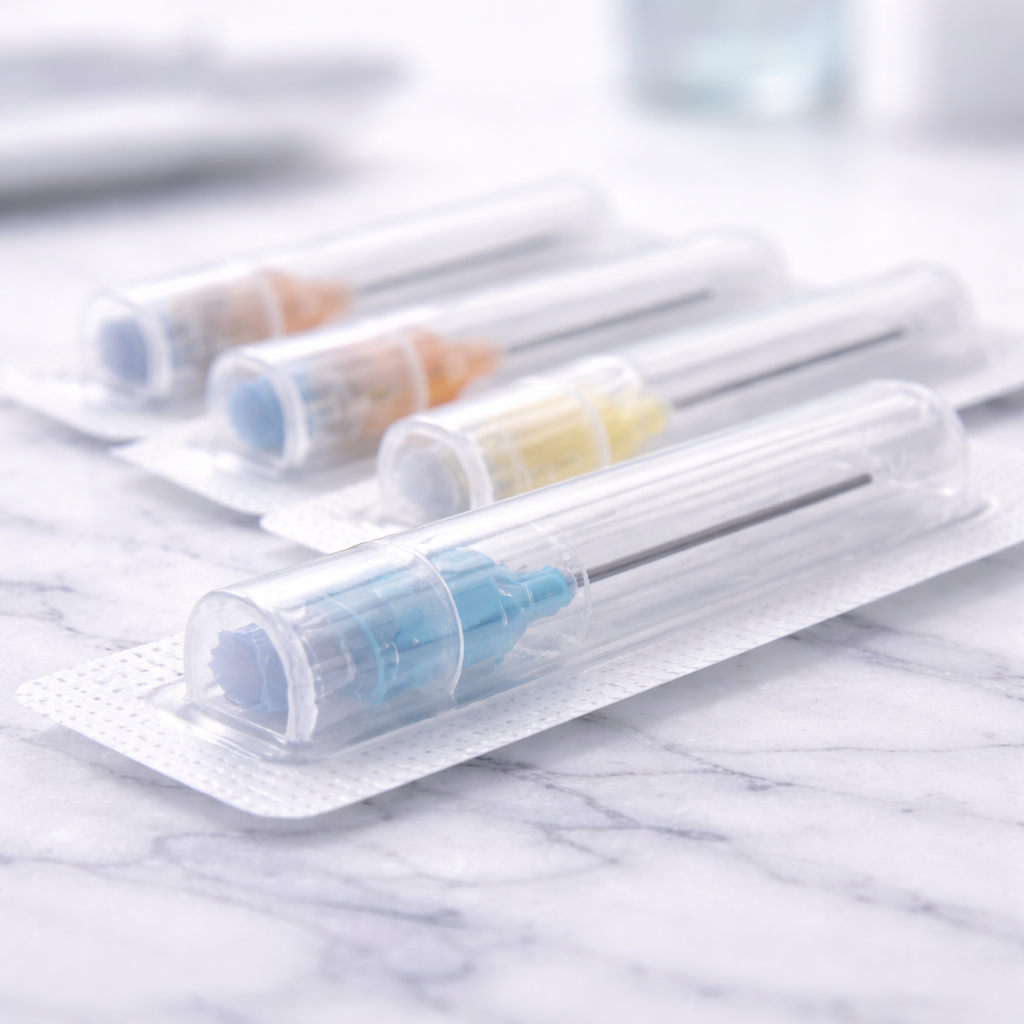
    What they do: Attach to mixing syringes for drawing BAC water and injecting it into peptide vials.

    Why specific needles: You need a needle long enough to reach the bottom of the BAC water vial (1.5 inch) and a gauge that allows easy flow without being so large it damages the vial stopper with repeated use.

    Specifications:

    • Gauge: 25G-27G (good flow rate, minimal stopper damage)
    • Length: 1.5 inch (reaches bottom of standard vials)
    • Type: Luer lock compatible

    Where to buy:

    • Amazon: Often sold with mixing syringes in kits
    • Separately: ~$8-10 for 100 count

    These items aren’t strictly necessary but make the process easier, safer, or more organized.

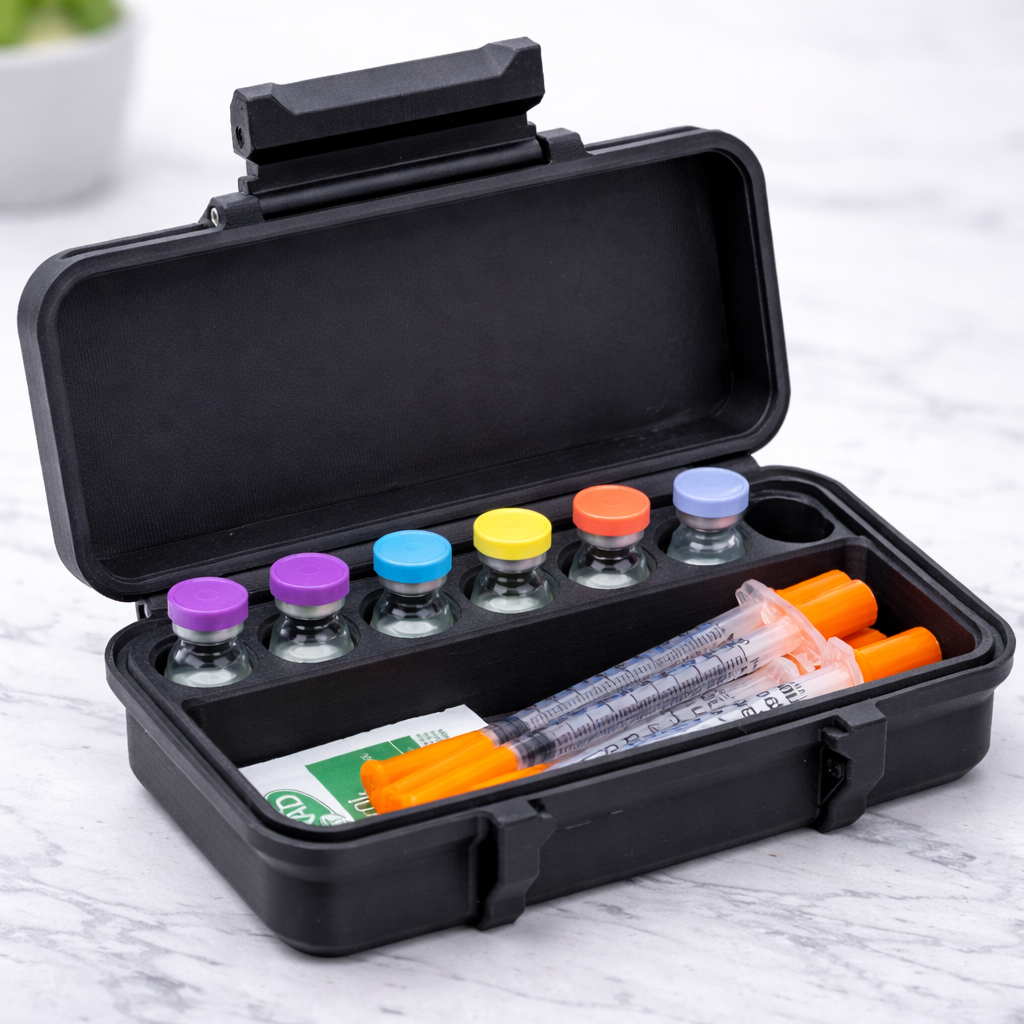
    What it does: Keeps vials organized and protected in the refrigerator.

    Why it helps: Peptide vials are small and easy to lose in a fridge. A dedicated case prevents them from getting knocked over, keeps them away from food, and makes it easy to track what you have.

    Options:

    • Small plastic cases designed for vials (~$10-20)
    • Foam inserts for standard small containers
    • Some vendors sell branded storage cases

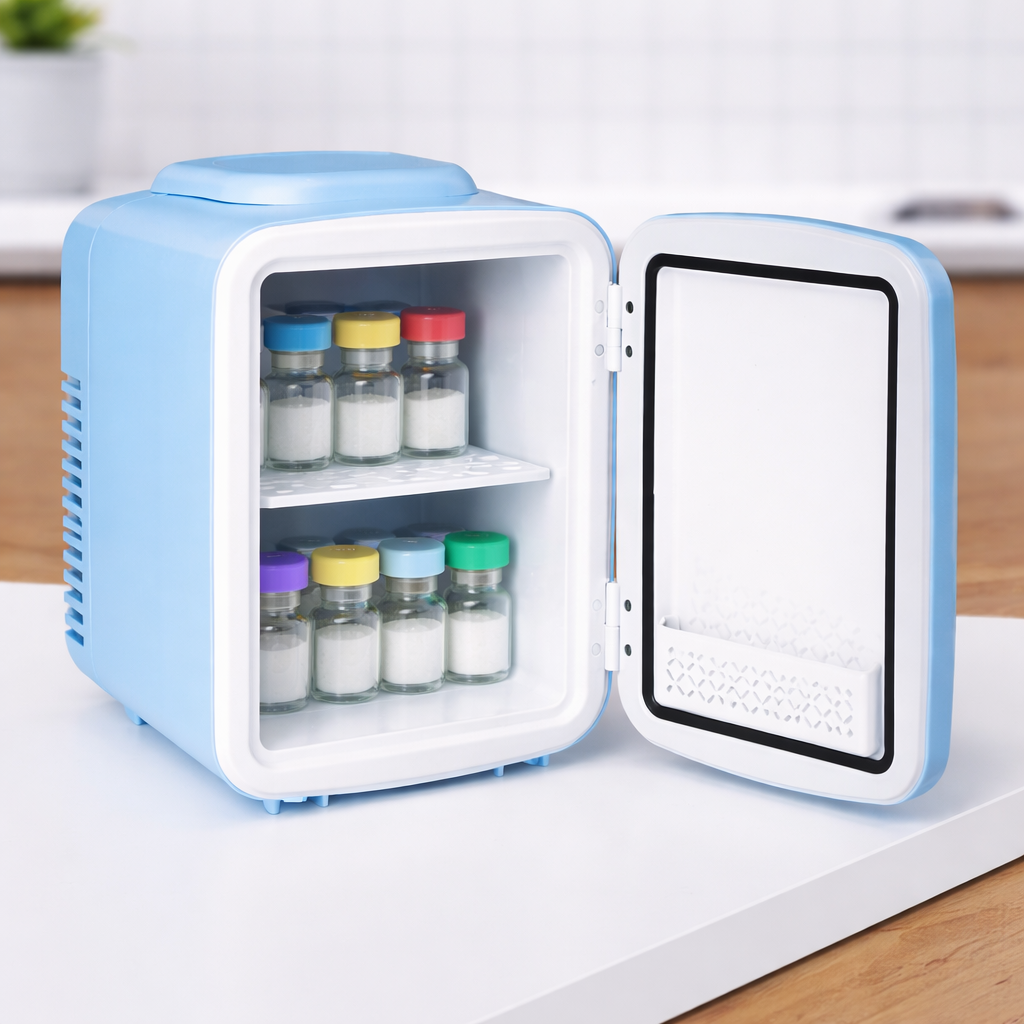
    What it does: Provides dedicated cold storage for peptides only.

    Why it helps:

    • Keeps peptides separate from food
    • Maintains consistent temperature (household fridges fluctuate)
    • Prevents accidental disposal by family members
    • Useful if you travel or want a secondary locationrd small containers
    • Some vendors sell branded storage cases

    Specifications:

    • Small countertop size (1.7-2.5 cubic feet) is plenty
    • Temperature should maintain 36-46°F (2-8°C)

    Cost: $50-100 for a basic mini fridge


    ItemQtyEst. Cost
    Bacteriostatic Water (30ml)1$18
    Insulin Syringes (100ct)1 box$15
    Alcohol Prep Pads (200ct)1 box$10
    Sharps Container (1qt)1$8
    Total~$51

    Note: This assumes you’ll use insulin syringes for both reconstitution and injection, which works but requires more careful technique.

    ItemQtyEst. Cost
    Bacteriostatic Water (30ml)2$36
    Insulin Syringes (100ct)1 box$15
    Mixing Syringes 3ml + Needle1 kit$12
    Alcohol Prep Pads (200ct)1 box$10
    Sharps Container (2 gallon)1$12
    Vial Storage Case1$15
    Total~$100

    This setup is more practical for ongoing use and includes backup BAC water.


    ItemBest SourceNotes
    Bacteriostatic WaterAmazon, peptide vendorsEnsure pharmaceutical grade
    Insulin SyringesAmazonNo Rx required in most states
    Mixing SyringesAmazonOften sold in reconstitution kits
    Alcohol PadsAmazon, any pharmacyGeneric is fine
    Sharps ContainerAmazon, any pharmacySome pharmacies provide free
    Vial Storage CaseAmazonOr repurpose any small container

    Pro tip: Some peptide vendors sell “reconstitution kits” that bundle syringes, needles, BAC water, and alcohol pads together. These can be convenient but are usually priced at a premium. Buying separately on Amazon is typically cheaper.


    Sterile water has no preservative. Once you add it to a peptide vial, you must use the entire contents immediately or within hours. BAC water allows multi-week storage of reconstituted peptides.

    Never reuse needles for injection. The needle dulls after a single use, making subsequent injections more painful and increasing infection risk. Syringes are cheap—use a fresh one every time.

    Needles larger than 27G (lower gauge number = thicker needle) are unnecessarily painful for subcutaneous peptide injection. Stick with 29G-31G.

    Unopened BAC water can be stored at room temperature. Once opened, refrigerate and use within 28 days. Mark the date on the vial when you first use it.

    Skipping the sterilization step saves 5 seconds and risks bacterial contamination. Always swab vial stoppers and injection sites.

    Never throw loose needles in the trash. Use a proper sharps container and dispose of it according to local regulations. Most pharmacies accept full sharps containers.


    Yes, you can use insulin syringes for both if you’re careful. Draw the BAC water, inject it into the peptide vial, wait for dissolution, then draw your dose. However, dedicated mixing syringes make this easier, especially for larger volumes.

    A box of 100 syringes lasts most people 2-4 months depending on dosing frequency. One 30ml BAC water vial reconstitutes 10-15 peptide vials. Alcohol pads are pennies each.

    In most US states, no prescription is required. Some states have restrictions. Amazon ships to most locations without issue.

    Use it. Vendor-supplied BAC water is typically the same pharmaceutical-grade product you’d buy elsewhere. It may be priced slightly higher but saves you a separate purchase.

    Individual items are usually cheaper and let you choose exact specifications. Starter kits are convenient if you want everything in one order and don’t mind paying a small premium.


  • 2026 Peptide Vendor Review: Independent Third-Party Testing Analysis

    2026 Peptide Vendor Review: Independent Third-Party Testing Analysis

    The peptide market is flooded with vendors making bold claims about “99% purity” and “pharmaceutical grade” products. But recent third-party testing reveals a shocking truth: nearly 40% of peptide vendors fail to meet their stated purity levels, with some testing as low as 75% actual peptide content.

    After spending months researching and analyzing COA (Certificate of Analysis) reports from 15+ peptide companies, I’ve identified the vendors you can actually trust and the red flags you must avoid.

    The peptide industry operates in a regulatory gray zone. Unlike supplements or pharmaceuticals, research peptides aren’t FDA-approved for human use, which means there’s no oversight ensuring what’s on the label matches what’s in the vial. This creates an environment where low-quality vendors can thrive—and many do.

    This review is based on:

    • Analysis of third-party COA reports from independent labs
    • Direct communication with vendor customer service
    • Community feedback from r/Peptides, r/Biohacking forums
    • Personal verification of shipping times and packaging
    • Comparison of pricing across identical products

    In this guide, you’ll discover:

    ✅ The 3 vendors with consistently verified 99%+ purity
    ✅ How to read and verify COA authenticity
    ✅ Pricing comparison across 8 major vendors
    ✅ Red flags that indicate a scam operation
    ✅ Specific recommendations based on your priorities

    Full transparency: This article contains affiliate links. If you purchase through our recommendations, we earn a small commission at no cost to you. However, our rankings are based solely on quality, testing verification, and community reputation—not commission rates. See our full methodology below.

  • Detailed Vendor Reviews
  • Comparison Table
  • Red Flags to Avoid
  • FAQs
  • Final Recommendations
  • Our evaluation criteria are based on what actually matters when choosing a peptide vendor:

    This is the MOST important factor. We look for:

    While we don’t recommend the cheapest options, pricing should be fair for verified quality. We compare:

    RED FLAG: If a vendor refuses to provide batch-specific COAs or only shows “sample” testing results, avoid them. Legitimate vendors provide testing for every batch.

    Why COAs Matter

    A Certificate of Analysis (COA) is your only guarantee of what’s actually in the vial. In an unregulated market, it’s the difference between verified quality and gambling with unknown compounds.

    When evaluating vendor COAs, look for:

    Purity Standards:

    💡 PRO TIP: Before ordering, ask the vendor for the COA of the specific batch they’ll ship. If they can’t provide it, that’s a red flag.

    Based on our evaluation criteria, we’ve ranked 9 peptide vendors into three tiers:

    These vendors consistently deliver 99%+ purity with verified third-party testing, excellent customer service, and strong community reputation.

    Good testing practices, fair pricing, generally positive reviews. Minor inconsistencies in availability or customer service.

    These vendors pass basic quality standards but have limitations such as mixed reviews, shipping inconsistencies, or transparency concerns.

    ⚠️ VENDORS TO AVOID: Amino Asylum (raided by FDA June 2025), generic Chinese suppliers without testing, Amazon/eBay sellers, and any vendor offering suspiciously low prices ($5 vials = red flag).

    Let’s dive into detailed reviews of each vendor…


    Quick Stats

    AttributeDetails
    Founded2024
    LocationCastle Rock, Colorado, USA
    ShippingUSA only, 2-3 days typical
    Avg Purity99%+
    Price Range$$$ (premium)
    Our Rating9.2/10

    What We Like

    • Triple third-party laboratory verification through independent certified labs including SafeCert Labs
    • COAs publicly posted on website before purchase—no need to request them
    • Excellent customer service with phone support and quick response times
    • Professional packaging with cold-chain mechanism for stability

    What Could Be Better

    • Higher prices than budget alternatives (15-20% above market average)
    • US shipping only—no international orders
    • Newer company (founded 2024) with less track record

    Testing & Quality

    Ascension Peptides sets the gold standard for third-party verification. Unlike competitors who use one testing lab, Ascension verifies every batch through THREE independent CLIA-certified laboratories. Every product page displays the current batch’s COA directly, and we verified multiple COAs by contacting the testing labs—all were authentic with purity between 99.1-99.7%.

    Product Selection

    34 products including BPC-157 (5mg and 10mg), TB-500, Epithalon, and unique blends like the Wolverine Stack (BPC-157 + TB-500) and GLOW blend (GHK-Cu + BPC-157 + TB-500).

    Pricing

    • BPC-157 5mg: ~$45-55
    • Free shipping on orders $250+
    • 15% off blends/stacks
    • Discount Code: SUBQPROTOC for 20% off

    Community Feedback

    • Great prices, fast shipping, quality products. I’ve never had one problem with this company.” – Kimberly G
    • “Great prices are why I purchased here, but the customer service will bring me back to buy more.” – Bryan C
    • “Best customer service you could ask for and very prompt in delivery” – Roger T

    Quick Stats

    AttributeDetails
    FoundedRecent
    LocationUSA
    ShippingUSA, Free UPS 2nd Day Air on $300+
    Avg Purity99%+
    Price Range$$ (competitive)
    Our Rating9.0/10

    What We Like

    • Finnrick Analytics “A” rating—highest independent testing score available
    • 48 five-star reviews on Trustpilot with zero negative reviews
    • Every batch tested to exceed 99% purity—batches that don’t meet standards are discarded
    • Professional packaging with COAs printed directly on vials
    • Active Telegram community for updates and promos

    What Could Be Better

    • Newer vendor with less long-term track record
    • Less brand recognition compared to established names

    Testing & Quality

    Product Selection

    Comprehensive catalog of research peptides including BPC-157, TB-500, GHK-Cu, and popular GLP-1 compounds. Selection is solid though not as extensive as some larger vendors.

    Pricing

    • Competitive with Tier 1 vendors
    • Free UPS 2nd Day Air shipping on orders $300+
    • 15% discount for military and first responders
    • Monthly discount codes shared via Telegram community

    Community Feedback

    • From start to finish, the experience exceeded my expectations.” – Sabrina S
    • “Everthing has been great with this company. Prices, quality, and customer service. “ – Walter B
    • “Highly recommend them to anyone serious about research-grade peptides.” – Aaron

    Quick Stats

    AttributeDetails
    FoundedRecent (newer vendor)
    LocationOrlando, Florida, USA
    ShippingUSA, free priority over $200
    Avg Purity99%+
    Price Range$$ (competitive)
    Our Rating9.0/10

    What We Like

    • 93% five-star rating on Trustpilot (279 reviews)—among the highest in the industry
    • cGMP manufacturing in USA facilities
    • Fast shipping with same-day processing available
    • Excellent customer service with quick issue resolution

    What Could Be Better

    • Newer vendor with less established track record
    • COAs not yet available for every product (available upon request)

    Testing & Quality

    Product Selection

    Massive catalog of 78+ peptides and blends including BPC-157, TB-500, GHK-Cu, CJC-1295, and many specialized research compounds. One of the largest selections among quality vendors.

    Pricing

    • Competitive with other top-tier vendors
    • Free shipping on $200+
    • Standard shipping: $9.95 flat rate
    • Overnight available: $49.95

    Community Feedback

    • Great experience with this company. Ultra fast shipping and top grade peptides!!” – Tarron
    • “I’ve made around 20 purchases from this company, and every experience has been outstanding” – Steven
    • “Fast shipping. Great peptides! Would purchase again” – William

    Quick Stats

    AttributeDetails
    FoundedMay 2024
    LocationOxnard, California, USA
    ShippingUSA (3-5 days), International unclear
    Avg Purity98%+
    Price Range$$ (competitive)
    Our Rating8.0/10

    What We Like

    • Third-party tested with HPLC and mass spectrometry
    • Strong GLP-1 selection (Semaglutide, Tirzepatide, Retatrutide)
    • California LLC registration verified
    • Clean, professional website with COAs on product pages
    • Accepts major credit cards (trust signal)

    What Could Be Better

    • Very new (less than 1 year old)
    • Limited independent reviews—no Trustpilot presence
    • No cold-chain shipping details provided
    • International shipping policies unclear

    Testing & Quality

    Apollo claims all products are third-party tested by accredited labs with HPLC and mass spectrometry verification. COAs are stated as available on product pages. Products are lyophilized for stability with 98%+ purity standard.

    Product Selection

    ~23 peptides with strong focus on trending compounds: Semaglutide, Tirzepatide, Retatrutide (GLP-1s), BPC-157, Epitalon, NAD+, IGF-1 LR3, GHK-Cu, and SNAP-8.

    Pricing

    • BPC-157 10mg: $59.99
    • Free shipping on $200+ (USA)
    • Discount Codes: FDN15 (15% off, never expires)

    Community Feedback

    VendorTierPurityShip TimeCOA AccessRating
    Ascension Peptides199%+2-3 days✅ Excellent (Triple-verified)9.2
    Orbitrex Peptides199%+2-3 days✅ Excellent (Finnrick A)9.0
    Core Peptides1 99%+2-3 days✅ Good (on request)8.5
    Biotech Peptides299%+2-4 days✅ Good8.0
    Apollo Peptide Sciences298%+3-5 days✅ Good7.8
    Peptide Sciences299%2-3 days⚠️ Internal only7.8
    Swiss Chems299%2-4 days⚠️ Inconsistent (better for SARMs)7.5
    Limitless Life Nootropics398.55-7 days⚠️ Mixed (under-dosing reports)7.0
    Royal Peptides3B-C (Finnrick)2-4 days✅ Janoshik6.8

    🚩 Warning Signs of Scam or Low-Quality Vendors. Avoid any vendor showing these red flags:

    1. No COAs or Generic “Sample” COAs – If they can’t provide batch-specific testing for the exact product they’re shipping, walk away.

    2. Suspiciously Low Prices – If BPC-157 is $25 for 5mg when everyone else charges $45-55, ask why. Often it’s because purity is 85%, not 99%.

    3. No Company Information – Legitimate vendors have:

    4. Pressure Tactics – “Limited time only!” “Last batch available!” are sales tricks, not how legitimate research companies operate.

    5. Medical Claims – Research peptides are NOT FDA-approved for human use. If a vendor makes medical claims or markets “for treatment,” they’re violating regulations—red flag.

    6. No Returns or Contact – If you can’t reach them before buying, you definitely can’t after.ag.

    7. International Operations with No Transparency -Some overseas vendors are legitimate, but many aren’t. Stick with US-based or well-established international operations with verified testing.

    Frequently Asked Questions

    How do I know if a vendor is legit?

    Look for three things:

    Our Tier 1 vendors (Ascension, Apollo) check all boxes.

    What’s the difference between oral and injectable peptides?

    Injectable peptides have higher bioavailability (your body absorbs more). Oral peptides are more convenient but may have reduced effectiveness. Some vendors like Ascension offer both—see our BPC-157 guide for details.

    Are peptides legal to buy?

    Research peptides exist in a regulatory gray zone. They’re legal to purchase for research purposes, but NOT FDA-approved for human use. Vendors cannot legally market them for treatment or consumption.

    How much should I expect to pay?

    Quality peptides typically cost:

    Significantly cheaper usually means lower purity.

    Do vendors ship internationally?

    Most US vendors only ship domestically. Apollo and Limitless offer limited international shipping—check their sites for current policies.

    What payment methods do legit vendors accept?

    Most accept:

    If they ONLY accept crypto or untraceable payments, be cautious.

    How should I store peptides?

    Unreconstituted (powder): Fridge or freezer
    Reconstituted (mixed with water): Refrigerator, use within 28 days

    See our peptide storage guide for details.

    Can I trust Trustpilot reviews?

    Use them as ONE data point, not the only source. Cross-reference with:

    See our peptide storage guide for details.

    What if I receive low-quality peptides?

    Document everything:

    Tier 1 vendors (Ascension, Apollo) have strong return policies.

    Our Final Verdict: Who Should You Choose?

    🥇 Best Overall: Ascension Peptides

    Choose if:
    Quality and verification are your top priorities

    With triple third-party verification and consistent 99%+ purity, Ascension sets the industry standard. Yes, you’ll pay 15-20% more than some competitors, but you’re guaranteed to receive exactly what’s on the label.

  • How to Read a Peptide COA: Complete Verification Guide (2026)

    How to Read a Peptide COA: Complete Verification Guide (2026)

    How to Read a Peptide COA: Complete Verification Guide (2026)

    A Certificate of Analysis (COA) is your only proof that a peptide contains what the vendor claims. In an unregulated market where nearly 40% of vendors fail independent purity testing, knowing how to read and verify a COA isn’t optional, it’s an essential skill.

    This guide will teach you exactly what to look for in a legitimate COA, how to spot fakes, and the steps to verify any certificate before you buy.

    What you’ll learn:

    • The 9 elements every legitimate COA must have
    • How to spot fake or suspicious certificates
    • Step-by-step verification process
    • Quick reference checklist

    A Certificate of Analysis is a document from a testing laboratory that verifies:

    Identity: Is this really BPC-157, or something else?

    Purity: What percentage is the target peptide vs. impurities?

    Contaminants: Are there harmful substances?

    Batch Information: When was it tested? Which production lot?

    Think of a COA like a lab report for your peptide. Without one, you’re relying on a vendor’s word—and when your health is at stake, that isn’t enough.

    Key Point:

    A COA from the vendor’s own lab is better than nothing, but third-party testing from an independent lab is the absolute gold-standard

    Not all COAs are created equal. Here’s what a trustworthy certificate must include:

    What to look for:

    • Lab name and full address
    • Contact information (phone, email, website)
    • Lab director or analyst signature
    • Accreditation status (ISO 17025 is ideal)

    RED FLAG: No lab name, generic headers like “Quality Control Department,” or untraceable contact information.


    What to look for:

    • Peptide name (e.g., “BPC-157 Acetate”)
    • Chemical formula or sequence
    • CAS number (if applicable)
    • Molecular weight

    RED FLAG: Vague descriptions like “Research Peptide” without specific identification.


    What to look for:

    • Unique identifier that matches your vial exactly
    • Format varies by lab (e.g., “LOT-2026-0115-BPC”)

    RED FLAG: Generic numbers like “SAMPLE001,” “N/A,” or the same lot number appearing on COAs for different products.


    What to look for:

    • Testing date within the past 12 months
    • Ideally within 90 days of your purchase

    RED FLAG: Dates from 2024 or earlier, no date listed, or future dates (yes, this happens).


    What to look for:

    • Purity percentage (98%+ is the standard for quality peptides)
    • Testing method specified (e.g., “RP-HPLC, C18 column”)
    • Retention time noted

    RED FLAG: Purity listed without methodology, or suspiciously perfect numbers like “100.00%.”


    What to look for:

    • Observed molecular weight matching theoretical weight
    • MS method specified (ESI-MS, MALDI-TOF, etc.)
    • Mass spectrum image or data

    RED FLAG: No mass spectrometry data at all. HPLC alone cannot confirm identity—only purity.


    What to look for:

    • Visual graph showing separation peaks
    • Dominant single peak for target peptide
    • Minimal secondary peaks (impurities)
    • Labeled axes and retention time

    RED FLAG: No chromatogram provided, blurry/low-resolution images, or chromatograms that look copy-pasted.


    For injectable peptides, look for:

    TestPurposeStandard
    Endotoxin (LAL)Bacterial contamination<0.5 EU/mg
    SterilityMicrobial contaminationPass/Fail
    Heavy MetalsLead, arsenic, mercuryBelow detection limits

    RED FLAG: Injectable products with no sterility or endotoxin testing mentioned.


    What to look for:

    • Clear specification limits
    • Actual results vs. acceptable range
    • Overall pass/fail statement

    RED FLAG: Results without reference ranges, or missing conclusion.


    This is the most misunderstood aspect of peptide testing—and one of the easiest ways to spot an incomplete COA.

    High-Performance Liquid Chromatography (HPLC) separates compounds in a sample based on how they interact with a solvent. The result is a chromatogram—a graph showing peaks for each compound detected.

    What HPLC measures:

    • The percentage of the main compound vs. impurities
    • How “clean” the sample is overall
    • Relative amounts of different substances present

    What HPLC cannot do:

    • Confirm the identity of the compound
    • Tell you what the main peak actually is
    • Distinguish between structurally similar peptides

    Think of HPLC like weighing a bag of coins. It can tell you the bag is 99% full of one type of coin—but it can’t tell you whether those coins are quarters or nickels.

    Mass Spectrometry (MS) measures the molecular weight of compounds in a sample. Each peptide has a unique molecular weight based on its amino acid sequence.

    What MS measures:

    • The exact molecular weight of the compound
    • Whether the peptide matches its expected formula
    • Detection of truncated or modified sequences

    What MS cannot do:

    • Measure purity or concentration
    • Tell you how much of the compound is present
    • Detect impurities that don’t ionize well

    Mass spectrometry is like checking the serial number on those coins. It confirms you actually have quarters—but doesn’t tell you if any are counterfeit or how many you have.

    MethodWhat it measuresLimitation
    HPLCPurity (% of target compound)Cannot confirm identity
    MSIdentity (molecular weight)Doesn’t measure purity

    Scenario: A vendor sells “BPC-157” that’s actually a truncated fragment missing the last two amino acids.

    TestResultWhat it means
    HPLC✅ 99.2%The sample is very pure, but pure what?
    MS✅ 1419 Da (expected 1419 Da)Correct! This is actually BPC-157

    Now consider a bad scenario:

    TestResultWhat it means
    HPLC✅ 99.2%Looks great on paper
    MS 1206 Da (expected 1419 Da)Wrong molecule—missing ~2 amino acids

    The HPLC passed because the sample was pure. But pure doesn’t mean correct. Without mass spectrometry, you’d never know you received the wrong peptide.

    Some vendors cut costs by only providing HPLC data:

    • “98% purity” with no MS data — You have no proof of identity
    • MS data from a different batch — Purity may vary between lots
    • In-house HPLC only — No independent verification of either metric

    Bottom Line: A COA with only HPLC data is like a report card with only attendance—it tells you something, but not the full picture. Always look for both HPLC (purity) and Mass Spec (identity) on the same certificate, from the same batch.


    Purity LevelQuality GradeRecommendation
    ≥99%Premium/PharmaceuticalIdeal for all applications
    98-99%Research gradeAcceptable standard
    95-98%Lower research gradeProceed with caution
    <95%SubstandardAvoid

    Most reputable vendors consistently deliver 98%+ purity. If a vendor’s COAs regularly show 95% or below, consider alternatives.


    A COA is only valuable if it’s authentic. Here’s how to verify:

    Search for the lab name online:

    • Does their website exist?
    • Do they actually test peptides?
    • Can you find their address and contact information?

    Trusted third-party labs include:

    The lot number on the COA must exactly match the lot number on your vial. If they don’t match, the COA doesn’t apply to your product.

    Online Verification (fastest when available)

    • Janoshik: Enter the report ID at janoshik.com/verify to confirm authenticity
    • Some labs have QR codes or verification portals on their COAs

    Email Verification if no online portal exists. Email the lab with:

    • The Report ID or document number
    • Date of analysis
    • Product tested
    • Vendor name

    The best time to verify a COA is before you spend any money. Quality vendors have nothing to hide—they’ll happily provide batch-specific certificates for any product you’re considering. Simply email or use their live chat to request the COA for the exact lot number currently in stock.

    If a vendor hesitates, only offers COAs after purchase, or sends you a generic “sample” certificate that isn’t tied to a real batch, take your business elsewhere. Transparency about testing is the bare minimum for any reputable supplier, and vendors who make verification difficult are often the ones with something to hide.


    Watch for these warning signs:

    • Missing batch/lot numbers
    • Outdated testing (more than 12 months old)
    • No chromatogram or mass spec data
    • Blurry, low-resolution scans
    • Purity listed as exactly 100% (unrealistic)
    • Same COA used for multiple batches
    • COA provided only after purchase and complaint
    • Vendor refuses to share testing data
    • Lab cannot verify the document when contacted

    Some vendors create template COAs with impressive-looking data, then reuse them across all batches. To spot these:

    • Request COAs for two different batch numbers
    • Compare the documents—are they identical except for the lot number?
    • Check if the testing dates make sense for when the batches were produced