
How to Reconstitute Peptides: A Step-by-Step Guide
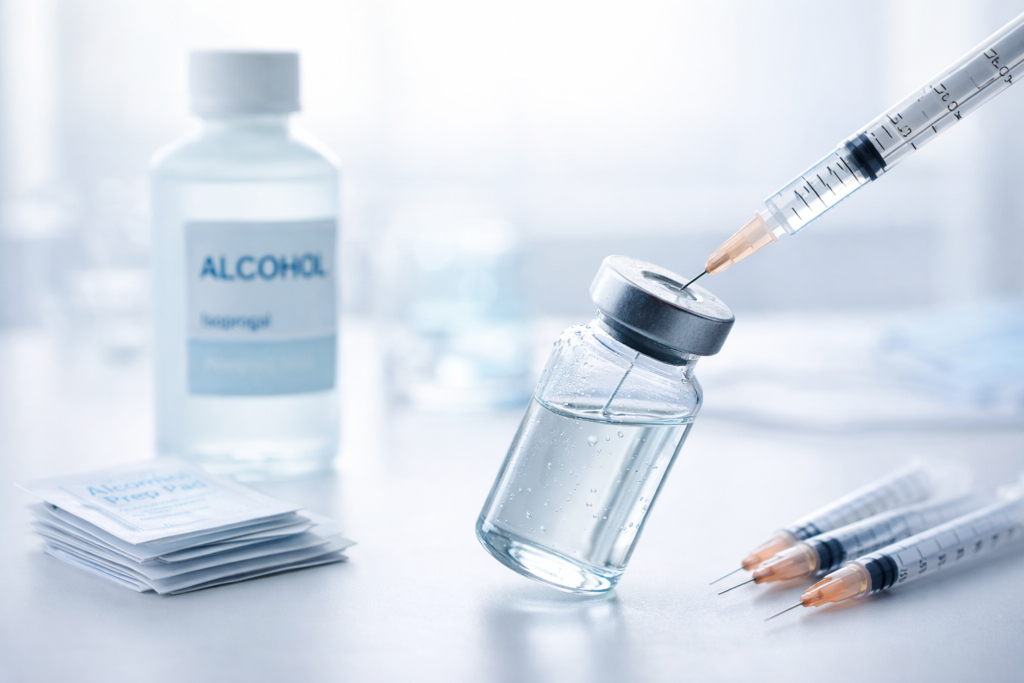
You’ve got your peptide vial. You have bacteriostatic water. Now what?
Reconstitution—the process of dissolving freeze-dried peptide powder into an injectable solution—looks intimidating the first time. It involves small volumes, precise math, and sterile technique. Get it wrong and you waste an expensive vial. Get it right and it’s a five-minute process you’ll do without thinking.
This guide covers everything: the full step-by-step process, how to calculate your concentration, how to read an insulin syringe, and how to store your vials correctly. We also include specific notes for BPC-157, TB-500, semaglutide, tirzepatide, and HGH, which have different handling requirements.
What we’ll cover:
- Why peptides come as powder (and what that means for stability)
- Equipment you need before you start
- Step-by-step reconstitution technique
- Concentration math and dosing calculators
- How to read an insulin syringe
- Storage guidelines after reconstitution
- Peptide-specific notes (BPC-157, TB-500, semaglutide, tirzepatide, HGH)
- Common mistakes and how to avoid them
This guide is for research and educational purposes only.
Why Peptides Come as Powder
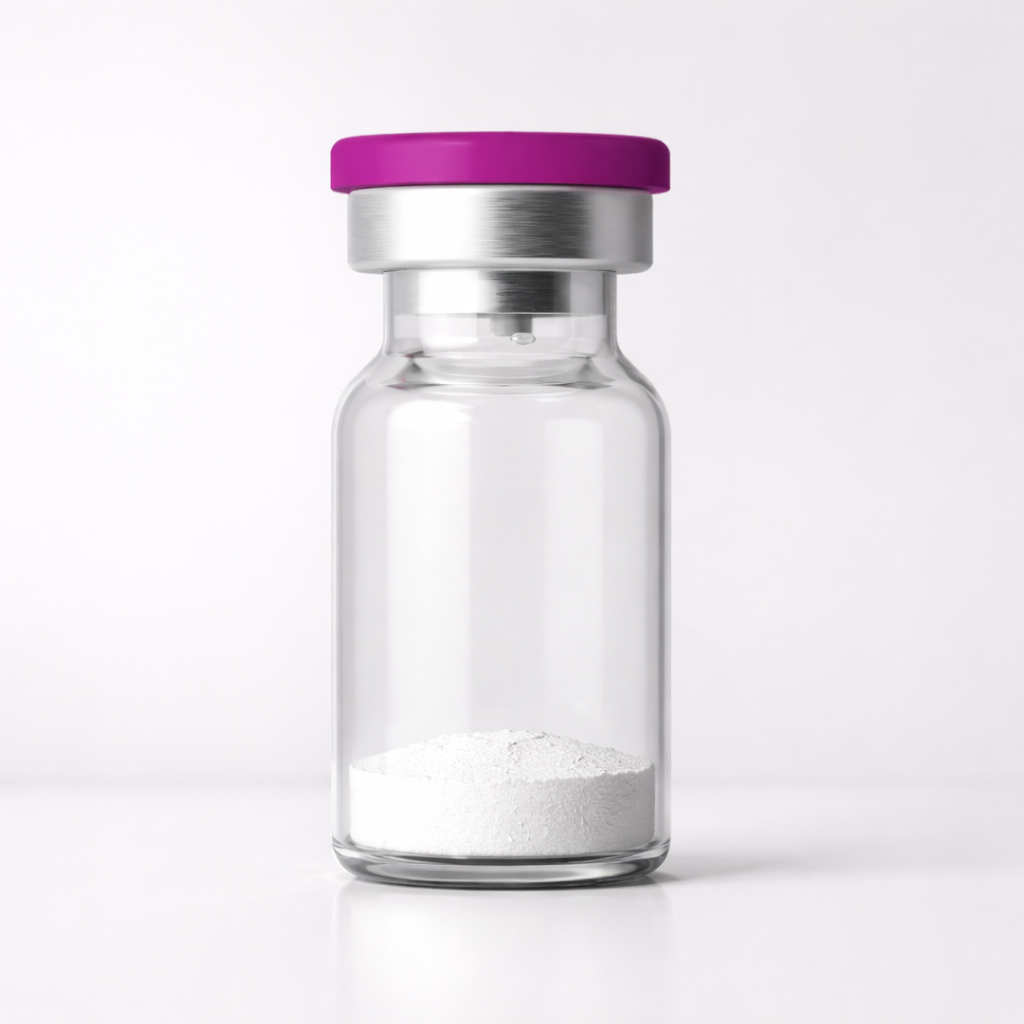
Peptides are sold in lyophilized (freeze-dried) form for one reason: stability.
In water, peptides degrade quickly through hydrolysis (water breaks the peptide bonds), oxidation (oxygen attacks specific amino acid residues), and bacterial growth. The lyophilization process removes more than 99% of water content, essentially pausing all of these degradation processes.
Shelf life comparison:
| Form | Storage Temp | Approximate Shelf Life |
| Lyophilized powder | -20°C (freezer) | 2–5 years |
| Lyophilized powder | 2–8°C (refrigerator) | 12–24 months |
| Reconstituted solution | 2–8°C (refrigerator) | 4–6 weeks |
| Reconstituted solution | Room temperature | Hours only |
The lyophilized cake or powder in your vial may look unremarkable, but it’s a highly stable form that can survive shipping at ambient temperatures. Once you add water, the clock starts—which is why reconstitution technique and proper storage matter.
What the powder should look like:
A white puck, cake, or powder at the bottom of the vial. Slight off-white is normal. A yellow or brown color before reconstitution suggests oxidation or heat damage. A wet, clumped, or discolored powder means moisture has entered the vial—do not use it. There are a few exceptions to this rule including GHK-Cu and other blends with it that will have a blue tint.
Equipment Checklist
Before you start, have everything ready:
| Item | Specification | Notes |
| Bacteriostatic water | 0.9% benzyl alcohol | NOT sterile water or saline |
| Insulin syringes | U-100, 0.5ml or 1.0ml, 29–31G | For drawing doses |
| Mixing syringe | 3ml luer lock | For adding BAC water |
| Needles | 25G–27G, 1 inch | Attaches to mixing syringe |
| Alcohol prep pads | 70% isopropyl | Individually wrapped |
| Nitrile gloves | Powder-free | Prevents protease contamination |
| Clean workspace | Wiped with 70% IPA | Let dry before starting |
| Sharps container | FDA-cleared | For needle disposal |
Full Equipment Guide with budget breakdowns →
Step-by-Step Reconstitution
Before You Begin
Bring both vials (peptide and BAC water) to room temperature. Cold-to-cold additions can cause peptide aggregation. Allow 15–20 minutes on a clean surface. Wipe your workspace with 70% IPA and let it fully dry.
Step 1: Prepare Your Space and Gloves
Put on powder-free nitrile gloves. Work away from fans, open windows, or HVAC vents—airborne particles are the enemy of sterile technique. Avoid talking or coughing over open equipment.
Step 2: Swab the Vial Stoppers
Using a fresh alcohol prep pad, wipe the rubber stopper on the BAC water vial and the peptide vial with a firm, single-direction stroke (not back and forth). Let both dry for 15–20 seconds. The alcohol must fully evaporate before needle insertion—wet IPA carried into the vial on the needle tip can damage protein-based peptides over time.
Step 3: Draw Your BAC Water
Calculate how much BAC water to add (see the dosing section below). Using your mixing syringe with a 25G–27G needle attached:
- Insert the needle into the BAC water vial
- Draw slightly more than your target volume
- Tap the barrel to bring bubbles to the top
- Eject excess back into the BAC water vial until you’re at exactly your target volume
Step 4: Handle the Vacuum
Most peptide vials are sealed under vacuum during manufacturing. This vacuum protects the powder from oxidation—but it creates a problem during reconstitution: if you insert a full syringe into a vacuum vial, the pressure differential will violently suck the water off the plunger tip in a high-velocity jet, shooting it directly onto the powder.
This matters.
A water jet hitting lyophilized powder can shear the peptide structure and cause aggregation. For HGH specifically, this can destroy activity instantly.
Two methods to handle vial vacuum:
Method A — Inject air first (recommended for beginners):
- Draw a volume of air equal to your intended BAC water volume into an empty syringe (e.g., draw 2ml air if you’re adding 2ml BAC water)
- Insert needle into peptide vial, slowly push in the air
- Withdraw needle, load your BAC water, proceed to Step 5
Method B — Vent the vial:
- Insert a needle alone (no syringe) into the peptide vial
- Let the vacuum equalize through the needle (you’ll hear/feel a brief hiss)
- Remove, then proceed with your BAC water syringe normally
Step 5: Add BAC Water to the Peptide Vial
This is the most important technique step:
- Insert the needle through the rubber stopper at a 45-degree angle
- Point the needle tip toward the glass wall—not toward the powder
- Slowly depress the plunger. Let the water flow down the inside glass wall in a thin sheet
- The water should pool at the bottom and dissolve the powder from beneath, not blast through it from above
Do this slowly. This is not a step to rush.
Step 6: Dissolve — Swirl, Never Shake
After adding the water:
- Gently swirl the vial in slow circles, or roll it between your palms
- Never shake — vigorous shaking generates shear forces that can denature peptides, especially HGH
- Allow 60–90 seconds for small peptides (BPC-157, TB-500)
- Allow 3–5 minutes for larger peptides (semaglutide, tirzepatide, HGH)
- If powder remains, set the vial aside for 5 minutes and try gentle swirling again
Step 7: Inspect the Solution
The reconstituted solution should be clear and colorless (a very faint pale yellow tint is normal for some peptides). If you see:
- Cloudiness or turbidity — do not use; indicates aggregation or contamination
- Visible particles or floating flecks — do not inject
- Persistent foam — normal; allow it to settle for a few minutes
- Deep yellow or brown color — degradation; discard
Step 8: Label and Refrigerate
Write the following on the vial or a label:
- Reconstitution date
- Concentration (e.g., “2,500 mcg/ml”)
- Calculated expiration date
Refrigerate within 30 minutes. Store at 2–8°C.
Concentration Math and Dosing
The Formula
Key Point:
Concentration (mcg/ml) = Total peptide (mcg) ÷ BAC water added (ml)
Convert mg to mcg by multiplying by 1,000. So a 5mg vial = 5,000 mcg.
Reference Examples
5mg vial + 1ml BAC water:
- Concentration: 5,000 mcg ÷ 1ml = 5,000 mcg/ml
- Each unit on a U-100 syringe (0.01ml) = 50 mcg
- 10 units (0.1ml) = 500 mcg
5mg vial + 2ml BAC water (most common)
- Concentration: 5,000 mcg ÷ 2ml = 2,500 mcg/ml
- Each unit (0.01ml) = 25 mcg
- 10 units (0.1ml) = 250 mcg
- 20 units (0.2ml) = 500 mcg
10mg vial + 2ml BAC water:
- Concentration: 10,000 mcg ÷ 2ml = 5,000 mcg/ml
- 10 units (0.1ml) = 500 mcg
- 20 units (0.2ml) = 1,000 mcg
10mg vial + 4ml BAC water:
- Concentration: 10,000 mcg ÷ 4ml = 2,500 mcg/ml
- Same as the 5mg + 2ml setup above
Choosing Your Reconstitution Volume
More BAC water = lower concentration = larger volume per dose = easier to measure precisely.
Less BAC water = higher concentration = smaller injection volume.
Practical sweet spot:
Most researchers use 2ml per 5mg vial (2,500 mcg/ml). This creates convenient math where every 10 units on the syringe = 250 mcg—a common dose for BPC-157 and similar peptides. The goal is to make your target dose land on a whole number of syringe units, not a fraction. Design your concentration to make the math clean.
Dosing Reference Tables
Need help with the math? Use our dosage calculator to get exact volumes for any concentration and dose.
At 2,500 mcg/ml (5mg in 2ml or 10mg in 4ml):
| Desired Dose | Volume | Syringe Units |
| 100 mcg | 0.04 ml | 4 units |
| 200 mcg | 0.08 ml | 8 units |
| 250 mcg | 0.10 ml | 10 units |
| 500 mcg | 0.20 ml | 20 units |
| 750 mcg | 0.30 ml | 30 units |
| 1,000 mcg | 0.40 ml | 40 units |
At 5,000 mcg/ml (5mg in 1ml or 10mg in 2ml):
| Desired Dose | Volume | Syringe Units |
| 100 mcg | 0.02 ml | 2 units |
| 250 mcg | 0.05 ml | 5 units |
| 500 mcg | 0.10 ml | 10 units |
| 1,000 mcg | 0.20 ml | 20 units |
How to Read an Insulin Syringe
U-100 insulin syringes are calibrated for insulin with 100 units per milliliter. The conversion is fixed and universal:
Key Point:
100 units = 1.0 ml — so 1 unit = 0.01 ml, and 10 units = 0.10 ml. This relationship holds regardless of what liquid is in the syringe.
Syringe Sizes
| Syringe Size | Max Capacity | Graduation |
| 0.3 ml (30-unit) | 0.3 ml | 1 unit (0.01 ml) |
| 0.5 ml (50-unit) | 0.5 ml | 1 unit (0.01 ml) |
| 1.0 ml (100-unit) | 1.0 ml | 2 units (0.02 ml) on most |
Important:
Most 1.0ml U-100 syringes use 2-unit graduations, not 1-unit. If you need 1-unit precision (for small doses), use a 0.3ml or 0.5ml syringe.
Drawing a Dose
- Insert needle into the reconstituted peptide vial
- Draw slightly past your target mark
- Tap the barrel to bring air bubbles to the top
- Push back to exactly your target mark
- This ensures you hit the graduation precisely and removes air
Storage After Reconstitution
Temperature
Store at 2–8°C (36–46°F)—standard refrigerator range.
- Do not freeze reconstituted peptides. Ice crystal formation shears molecular structures.
- Do not store on the refrigerator door. Door temperature swings 5–10°F with each opening. Keep vials on the back of a middle shelf.
- Protect from light. Many peptide amino acids degrade under UV and visible light. Keep in the original box or a dark drawer.
Duration by Peptide Type
| Peptide | Reconstituted Stability |
| BPC-157 | 4–6 weeks at 2–8°C |
| TB-500 | 4 weeks at 2–8°C |
| Semaglutide | 28–56 days at 2–8°C |
| Tirzepatide | 28 days at 2–8°C |
| HGH (somatropin) | 14–28 days at 2–8°C |
| Reconstituted in sterile water (no BAC) | 24 hours maximum |
Pre-Freeze Aliquoting
For large vials or expensive peptides you won’t use quickly:
- Reconstitute as normal
- Divide into single-use volumes in separate vials
- Freeze the aliquots you won’t use soon
- Thaw aliquots in the refrigerator overnight before use
- Never refreeze a thawed aliquot
Bacteriostatic Water vs Sterile Water vs Saline
Bacteriostatic Water (Standard Choice)
Contains 0.9% benzyl alcohol as a preservative. This inhibits bacterial growth in multi-use vials. It’s the correct choice for virtually all research peptide reconstitution.
Benzyl alcohol note:
Clinically insignificant at research peptide doses for healthy adults. However, benzyl alcohol is contraindicated in neonates and should be avoided in hCG reconstitution.
Sterile Water for Injection (SWFI)
No preservative. Any solution reconstituted in SWFI must be used within 24 hours. Useful for hCG or single-dose preparations only.
Normal Saline (0.9% NaCl)
Sodium chloride ions can reduce solubility of some peptides. Not the preferred reconstitution solvent. Primarily used to dilute already-reconstituted peptides for IV preparations.
Sterile Technique
Contaminated peptide solutions can harbor bacteria that produce proteases—enzymes that cleave peptide bonds and completely destroy activity.
Core principles:
- Swab every rubber stopper before every needle insertion. Let alcohol dry completely.
- Never let a needle tip touch any surface—including your gloves.
- Use a fresh syringe for each vial entry. A needle dulls after one pass through rubber.
- Work away from air currents. Do not talk or cough over open equipment.
- Use powder-free nitrile gloves. Skin proteases and oils can degrade peptide solutions.
- Define a clean zone on your workspace and keep it clean.
Peptide-Specific Notes
BPC-157
Reconstitution: 5mg + 2ml BAC water → 2,500 mcg/ml (10 units = 250 mcg). Dissolves readily in 60–90 seconds with gentle swirling.
If it won’t dissolve: Some batches may require 0.6% acetic acid instead of BAC water. This is rare with quality vendors.
Storage: 4–6 weeks reconstituted at 2–8°C. Lyophilized: 2+ years at -20°C.
TB-500 (Thymosin Beta-4)
Reconstitution: 5mg + 2ml BAC water → 2,500 mcg/ml. TB-500 is a larger peptide (43 amino acids) and may take 2–3 minutes to fully dissolve. Be patient with gentle swirling.
Shaking sensitivity: TB-500’s larger molecular structure is more susceptible to shear-induced aggregation. Extra care is warranted.
Common dosing: 2mg (2,000 mcg) = 80 units at 2,500 mcg/ml.
Storage: 4 weeks reconstituted at 2–8°C.
Semaglutide
Reconstitution standard: 5mg + 2ml BAC water → 2.5 mg/ml (2,500 mcg/ml).
Dosing at 2.5 mg/ml:
| Weekly Dose | Units |
| 0.25 mg | 10 units |
| 0.5 mg | 20 units |
| 1.0 mg | 40 units |
| 2.0 mg | 80 units |
Storage: 28–56 days reconstituted at 2–8°C. Do not freeze.
Tirzepatide
Standardized concentration: Standardize ALL tirzepatide preparations to 5 mg/ml regardless of vial size to eliminate dosing errors.
- 10mg + 2ml BAC water = 5 mg/ml
- 15mg + 3ml BAC water = 5 mg/ml
- 30mg + 6ml BAC water = 5 mg/ml
Dosing at 5 mg/ml:
| Weekly Dose | Units |
| 2.5 mg (starting) | 50 units |
| 5 mg | 100 units |
| 7.5 mg | 150 units |
| 10 mg | 200 units (two injections) |
Storage: 28 days reconstituted at 2–8°C. Do not freeze.
HGH (Human Growth Hormone / Somatropin)
HGH is a 191-amino acid protein—significantly more fragile than small synthetic peptides. The entire chain must maintain its three-dimensional folded structure to work. Shaking, heat, or mechanical stress denatures it. A denatured HGH molecule looks fine but has zero biological activity.
Reconstitution for HGH — stricter technique:
- Allow vials to reach room temperature slowly (15–20 min)
- Add BAC water extremely slowly down the glass wall
- After adding water, do not swirl — allow dissolution by gravity and gentle rolling only
- Allow 5–10 minutes for complete dissolution
- Any cloudiness after 10 minutes = denatured; discard
Common setups:
- 10 IU vial + 1ml BAC water → 10 IU/ml (10 syringe units = 1 IU)
- 10 IU vial + 2ml BAC water → 5 IU/ml (10 syringe units = 0.5 IU)
Note:
HGH is dosed in International Units (IU), not mcg. Do not confuse syringe “units” with HGH activity units.
Storage: 14–28 days reconstituted at 2–8°C.
Common Mistakes
1. Shaking the Vial
Vigorous shaking generates shear forces and creates air-water interfaces where peptides denature. For HGH, shaking can destroy an entire vial in seconds.
Fix: Gentle swirling only. If powder isn’t dissolving, be patient—not forceful.
2. Injecting Water Directly onto the Powder
Directing the BAC water jet straight onto the lyophilized cake causes mechanical damage and aggregation.
Fix: Always aim toward the glass wall, not the powder.
3. Not Handling the Vacuum
Inserting a full syringe into a vacuum-sealed vial causes a violent water jet. Even without denaturation, the powder gets blasted rather than gently dissolved.
Fix: Always equalize vacuum pressure before adding BAC water—inject matching air volume first, or vent the vial.
4. Using the Wrong Water Type
Tap water, filtered water, and distilled water are not sterile. Sterile saline can reduce solubility. Only bacteriostatic water (multi-dose) or sterile water for injection (single-use, 24 hours) are appropriate.
5. Concentration Math Errors
Confusing mg and mcg, or forgetting your reconstitution volume, leads directly to dose errors. A 10x concentration miscalculation = a 10x dose error.
Fix: Always write the concentration on the vial. Use the reference tables above.
6. Wrong Storage Temperature
Leaving reconstituted vials at room temperature accelerates degradation. Storing on the refrigerator door causes repeated temperature swings.
Fix: Back of the middle shelf. Never door. Never room temperature.
7. Not Letting Alcohol Dry
Wet IPA carried into a vial on the needle tip introduces trace alcohol that can affect protein-based peptides over cumulative insertions.
Fix: Wait 15–20 seconds after swabbing before inserting the needle.
8. Reusing Needles Between Vial Entries
A needle dulls after one passage through a rubber stopper, and may carry rubber microparticles into the solution.
Fix: One needle entry per needle.
FAQ
Q: Can I use sterile saline instead of bacteriostatic water?
Not recommended. Sodium chloride can reduce peptide solubility, and saline without a preservative is single-use only. Bacteriostatic water is the standard choice.
Q: My BAC water says “for laboratory use only”—is that okay?
No. You need pharmaceutical-grade BAC water suitable for injection. “Laboratory use only” products are not manufactured to injectable standards.
Q: How do I know if my peptide dissolved completely?
The solution should be clear with no visible powder, particles, or clumps. Gently tilt the vial and watch for undissolved material. If residue remains after 10–15 minutes of gentle swirling, the peptide may require a different solvent or may be degraded.
Q: What if the vial has no vacuum when I insert the needle?
Some manufacturers seal under inert gas at neutral pressure. This is fine. If the stopper shows any physical damage, inspect carefully before using.
Q: My reconstituted peptide turned cloudy overnight in the fridge. Is it ruined?
Maybe not. Allow it to return to room temperature and swirl gently. If clarity is restored, it was likely precipitation. If cloudiness persists or worsens, discard—possible contamination.
Q: How long is bacteriostatic water good for after opening the vial?
28 days. Write the date on the BAC water vial when you first puncture the stopper.
Summary Checklist
Before reconstitution:
- Both vials at room temperature (15+ min)
- Workspace wiped with 70% IPA, dried
- Nitrile gloves on
- BAC water volume calculated
- Concentration math confirmed
During reconstitution:
- Stoppers swabbed, fully dried
- Vial vacuum equalized before adding water
- Water directed at glass wall, not powder
- Swirled gently—never shaken
- Solution inspected (clear, no particles)
After reconstitution:
- Vial labeled with date, concentration, expiration
- Refrigerated within 30 minutes
- Stored on middle/back shelf, away from light